- Messages
- 5,265

The Olivia Nuzzi and RFK Jr. Affair Is Messier Than We Ever Could Have Imagined
Inside the most important, and also least important, story of our time
www.theringer.com

Follow along with the video below to see how to install our site as a web app on your home screen.
Note: This feature may not be available in some browsers.


 www.pewresearch.org
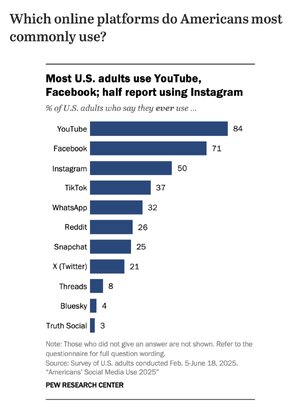

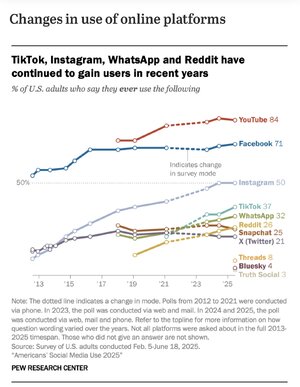
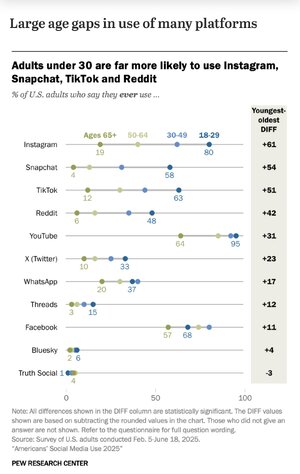
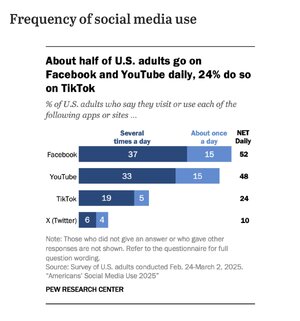
Thank you for using those so we don't have to.Americans’ Social Media Use 2025
YouTube remains the most popular, but adults are increasingly using Instagram, TikTok, WhatsApp and Reddit. Use of some platforms varies by age, gender, and race and ethnicity.


This is unbelievable...The Olivia Nuzzi and RFK Jr. Affair Is Messier Than We Ever Could Have Imagined
Inside the most important, and also least important, story of our timewww.theringer.com


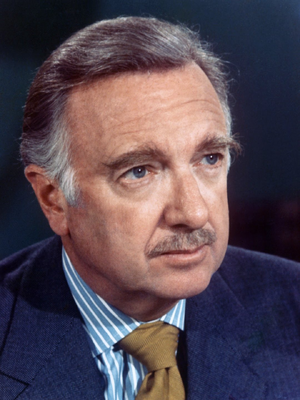
In 1958 legendary CBS News journalist Edward R. Murrow, who had famously dared to criticize Senator Joseph McCarthy on his show at the height of his power and popularity in the Second Red Scare, gave a speech to a dinner of Television & Radio Corporate CEOs and Bigwigs, and famously spoke truth to power. I've included some excerpts from his speech below, and it seems more relevant today than ever, and it could also apply to the internet and social media as well as TV and radio. Murrow has got to be spinning in his grave at what is happening now.So long, CBS. It was a good run.

“
The special, which aired at 8 p.m. on Saturday, averaged 1.5 million viewers — a whopping 20% decline in viewers compared to the year-to-date average for the hour, which previously was airing a third hour of “48 Hours,” according to preliminary Nielsen ratings data released Tuesday.
For the all-important 25- to 54-year demographic, ratings tanked 44% to 237,000, the agency said.
On YouTube, Weiss’ hour-long sitdown with Kirk amassed just 109,000 views as of Tuesday evening.“

 deadline.com