Barney "Nips It In The Bud": This Date in History

  • Thread starter Thread starter donbosco
  • Start date Start date
  • Replies: 1K
  • Views: 282K
  • Off-Topic 
Charlie Lawson planned the murders far enough ahead of time to imagine this family portrait being contemplated by the world in the aftermath. Indeed, he chose the holiday for maximum “effect,” sent the only one who might have stopped him away, and even ritualistically arranged the bodies. One could even argue that he also sought media fame in a similar way that modern mass murderers so often do. Charlie Lawson was a bloody visionary.


Songs…


As I mentioned on the holiday music thread when this song was posted, I am quite familiar with the story and have been by the Lawson property numerous times over the years. Mrs fourheels has a former co-worker who lives very near the site of the murders and bwas in a play about the murders a few years back
 
As I mentioned on the holiday music thread when this song was posted, I am quite familiar with the story and have been by the Lawson property numerous times over the years. Mrs fourheels has a former co-worker who lives very near the site of the murders and bwas in a play about the murders a few years back

Here is the podcast episode titled "The Portrait" about the murders from August of 2015.

Episode 25: The Portrait (8.28.2015)


The best copy of the Family Portrait that I have seen is at that link.

The transcript of the episode is here: https://thisiscriminal.com/wp-content/uploads/2015/08/Episode-25-The-Portrait.pdf

Both mention the play as well as some things about the case that are local lore of a sort.
 
Here is the podcast episode titled "The Portrait" about the murders from August of 2015.

Episode 25: The Portrait (8.28.2015)


The best copy of the Family Portrait that I have seen is at that link.

The transcript of the episode is here: https://thisiscriminal.com/wp-content/uploads/2015/08/Episode-25-The-Portrait.pdf

Both mention the play as well as some things about the case that are local lore of a sort.
Thanks for sharing. We may have to check it out sometime.
 
IMG_2603.jpeg

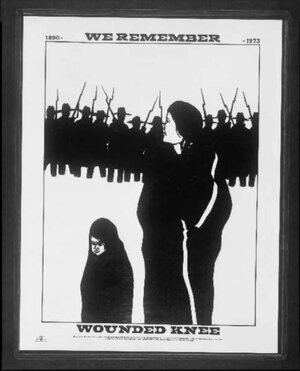
“On Dec. 29, 1890, a Lakota encampment on the Pine Ridge Reservation was attacked by the U.S. Army and close to 300 Native Americans were murdered near Wounded Knee Creek in South Dakota. ‘We Remember’ poster by Bruce Carter, Library of Congress collection.” Zinn Education Project.


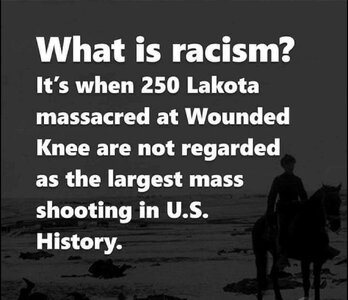
THIS was the largest mass shooting in United States History.


Addendum, Public Statement of September 25, 2025 by trump Administration Secretary of Defense Pete Hegseth: “Under my direction, the soldiers who fought at the Battle of Wounded Knee will keep their medals. This decision is final. Their place in history is settled.”(Tweet Message from account @SecWar)

IMG_2601.jpeg
 
Saw this on Facebook......

"I was watching Heather Cox Richardson the other night when she mentioned, almost in passing, one of the stranger accusations to come out of Mitt Romney
years. After Mitt Romney voted to convict Donald Trump on one count during the first impeachment, Trump promptly claimed that Romney was secretly working for the Democrats. Not merely wrong. Not misguided. But an infiltrator. A plant.

Richardson paused, as historians often do, and noted how strange this was. Romney had been the Republican nominee for president in 2012. Less than a decade earlier, he had carried the party’s banner nationwide. The idea that he was somehow a long embedded Democratic sleeper agent was, in her word, bonkers.

She was right. But the real story is not that the theory is ridiculous. It is why it felt plausible to so many people.

The Romney-as-plant theory is not an accident or a fringe misunderstanding. It is a feature of how Trumpism redefined political loyalty and, by extension, political reality. It reveals less about Romney than it does about the psychological architecture of the MAGA movement.

Before Trump, American political parties were messy coalitions. They fought internally. They tolerated dissent. You could be a Republican who disagreed with other Republicans on tone, tactics, or even major policy questions without being declared an existential threat. Politics was adversarial, but it was still recognizably pluralistic.

Trump broke that model.

From the beginning, Trump framed politics not as competition between ideas, but as a struggle between friends and enemies. Loyalty was personal, not institutional. Agreement was not sufficient. You had to signal alignment in affect, language, and posture. Once that framework took hold, disagreement stopped being a normal democratic function and became evidence of betrayal.

Romney was uniquely vulnerable to this reframing because he embodied the old Republican elite Trumpism defined itself against. He was wealthy, technocratic, globally oriented, and publicly concerned with norms and character. In the pre Trump GOP, those traits were assets. In the MAGA imagination, they became markers of corruption.

When Romney criticized Trump’s behavior, he was not heard as a conservative with a different theory of leadership. He was heard as an imposter revealing himself.

This is where conspiracy thinking enters.

Conspiracy theories thrive in moments of identity rupture. They provide clean explanations for messy change. Instead of acknowledging that a movement has evolved in ways that exclude former allies, conspiracy thinking externalizes the loss. Romney did not leave the movement. He was never really part of it. The movement did not fracture. It was infiltrated.

This logic performs an important emotional service. It preserves the moral purity of the in group. If Romney is a plant, then MAGA did not fail to persuade him. He was always aligned with the enemy. There is no need to ask why certain Republican leaders found Trump unacceptable. There is no need to interrogate whether institutional loyalty or constitutional norms matter. The problem is not internal disagreement. It is contamination.

The theory also depends on a misunderstanding of how power works.

Infiltration implies coordination, secrecy, and reward. But Romney’s opposition to Trump was public, consistent, and costly. It alienated him from the party base. It diminished his influence. It ultimately helped push him toward retirement. There was no payoff. No hidden advancement. No Democratic embrace waiting in the wings. What there was, instead, was a political system that increasingly punishes dissent.

That punishment is the point.

Trumpism does not merely demand loyalty. It retroactively rewrites identity. Once someone breaks with the leader, their entire past must be reinterpreted. Romney did not become disloyal in 2019. He must have always been disloyal. The same logic has been applied to career civil servants, judges, prosecutors, and even Republican appointees who carried out their duties in ways that conflicted with Trump’s personal interests. When institutions resist, they are not functioning. They are conspiring.

Richardson, as a historian, recognizes this pattern because it is not new. Authoritarian movements often collapse the distinction between opposition and treason. Once that collapse occurs, facts lose their stabilizing power. Romney’s documented Republican career does not disprove the conspiracy. It becomes part of it. A deeper cover. A longer con.

This is why the theory cannot be argued away with evidence. Evidence is not what sustains it. What sustains it is a worldview in which loyalty is the highest virtue and disagreement is moral failure.

The irony is that Romney’s actual behavior is remarkably old fashioned. He acted as though senators are accountable to the Constitution rather than to a single leader. He treated impeachment as a legal and moral process rather than a team sport. Whether one agrees with his conclusions or not, none of this requires a secret Democratic handler. It requires only a belief system that predates Trump.

That belief system is now treated as foreign.

Watching Richardson lay this out, what struck me most was how quickly the extraordinary has become normalized. A former Republican presidential nominee is accused of being a Democratic plant, and the accusation circulates not as satire but as plausible explanation. That should not be dismissed as internet noise. It is diagnostic.

The Romney conspiracy tells us that Trumpism is not merely a set of policy preferences. It is an identity structure that cannot tolerate internal dissent without recasting it as existential threat. It is a politics that replaces persuasion with purification and disagreement with expulsion.

Romney was never an infiltrator. He was a stress test.

And the fact that so many people needed him to be unreal tells us far more about the movement that rejected him than it ever could about the man himself."

 
Saw this on Facebook......

"I was watching Heather Cox Richardson the other night when she mentioned, almost in passing, one of the stranger accusations to come out of Mitt Romney
years. After Mitt Romney voted to convict Donald Trump on one count during the first impeachment, Trump promptly claimed that Romney was secretly working for the Democrats. Not merely wrong. Not misguided. But an infiltrator. A plant.

Richardson paused, as historians often do, and noted how strange this was. Romney had been the Republican nominee for president in 2012. Less than a decade earlier, he had carried the party’s banner nationwide. The idea that he was somehow a long embedded Democratic sleeper agent was, in her word, bonkers.

She was right. But the real story is not that the theory is ridiculous. It is why it felt plausible to so many people.

The Romney-as-plant theory is not an accident or a fringe misunderstanding. It is a feature of how Trumpism redefined political loyalty and, by extension, political reality. It reveals less about Romney than it does about the psychological architecture of the MAGA movement.

Before Trump, American political parties were messy coalitions. They fought internally. They tolerated dissent. You could be a Republican who disagreed with other Republicans on tone, tactics, or even major policy questions without being declared an existential threat. Politics was adversarial, but it was still recognizably pluralistic.

Trump broke that model.

From the beginning, Trump framed politics not as competition between ideas, but as a struggle between friends and enemies. Loyalty was personal, not institutional. Agreement was not sufficient. You had to signal alignment in affect, language, and posture. Once that framework took hold, disagreement stopped being a normal democratic function and became evidence of betrayal.

Romney was uniquely vulnerable to this reframing because he embodied the old Republican elite Trumpism defined itself against. He was wealthy, technocratic, globally oriented, and publicly concerned with norms and character. In the pre Trump GOP, those traits were assets. In the MAGA imagination, they became markers of corruption.

When Romney criticized Trump’s behavior, he was not heard as a conservative with a different theory of leadership. He was heard as an imposter revealing himself.

This is where conspiracy thinking enters.

Conspiracy theories thrive in moments of identity rupture. They provide clean explanations for messy change. Instead of acknowledging that a movement has evolved in ways that exclude former allies, conspiracy thinking externalizes the loss. Romney did not leave the movement. He was never really part of it. The movement did not fracture. It was infiltrated.

This logic performs an important emotional service. It preserves the moral purity of the in group. If Romney is a plant, then MAGA did not fail to persuade him. He was always aligned with the enemy. There is no need to ask why certain Republican leaders found Trump unacceptable. There is no need to interrogate whether institutional loyalty or constitutional norms matter. The problem is not internal disagreement. It is contamination.

The theory also depends on a misunderstanding of how power works.

Infiltration implies coordination, secrecy, and reward. But Romney’s opposition to Trump was public, consistent, and costly. It alienated him from the party base. It diminished his influence. It ultimately helped push him toward retirement. There was no payoff. No hidden advancement. No Democratic embrace waiting in the wings. What there was, instead, was a political system that increasingly punishes dissent.

That punishment is the point.

Trumpism does not merely demand loyalty. It retroactively rewrites identity. Once someone breaks with the leader, their entire past must be reinterpreted. Romney did not become disloyal in 2019. He must have always been disloyal. The same logic has been applied to career civil servants, judges, prosecutors, and even Republican appointees who carried out their duties in ways that conflicted with Trump’s personal interests. When institutions resist, they are not functioning. They are conspiring.

Richardson, as a historian, recognizes this pattern because it is not new. Authoritarian movements often collapse the distinction between opposition and treason. Once that collapse occurs, facts lose their stabilizing power. Romney’s documented Republican career does not disprove the conspiracy. It becomes part of it. A deeper cover. A longer con.

This is why the theory cannot be argued away with evidence. Evidence is not what sustains it. What sustains it is a worldview in which loyalty is the highest virtue and disagreement is moral failure.

The irony is that Romney’s actual behavior is remarkably old fashioned. He acted as though senators are accountable to the Constitution rather than to a single leader. He treated impeachment as a legal and moral process rather than a team sport. Whether one agrees with his conclusions or not, none of this requires a secret Democratic handler. It requires only a belief system that predates Trump.

That belief system is now treated as foreign.

Watching Richardson lay this out, what struck me most was how quickly the extraordinary has become normalized. A former Republican presidential nominee is accused of being a Democratic plant, and the accusation circulates not as satire but as plausible explanation. That should not be dismissed as internet noise. It is diagnostic.

The Romney conspiracy tells us that Trumpism is not merely a set of policy preferences. It is an identity structure that cannot tolerate internal dissent without recasting it as existential threat. It is a politics that replaces persuasion with purification and disagreement with expulsion.

Romney was never an infiltrator. He was a stress test.

And the fact that so many people needed him to be unreal tells us far more about the movement that rejected him than it ever could about the man himself."
Here is the referenced video


The author is Genny Harrison

 
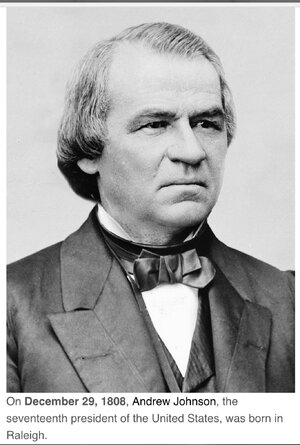
How Low Can We Go America? #OTD in 1808 Andrew Johnson was born in Raleigh. His father died in 1811 and poverty beset the family. At 17 they moved to Tennessee where Johnson worked as a tailor. Mainly an autodidact he climbed the ladder of political office. A unionist when Tennessee seceded, he was Lincoln’s second term Vice President in 1864.

On the assassination of Lincoln in April 1865 Johnson became the 17th president. He did nothing to assure Civil Rights to the newly freed and was impeached though acquitted by the Senate. He served out his term. Until recent years many considered him our worst President. Of course he has rivals in that competition, among them another Tar Heel born, James K. Polk. .

His impeachment was less warranted than trump’s two cases. Another native-born North Carolinian, President James Polk’s pro-slavery aggression against Mexico was despicable and violated ‘Just War Principles’ and for that he probably deserves at least as great a consideration as bottom president as does Johnson. I often heard Hoover mentioned when I was growing up and his wrong-headed economic ideals in respect to The Great Depression definitely made his a worst-case scenario for his times. He would have been my Father’s pick. I’ve even heard Jimmy Carter’s name tossed out for consideration by heartless, trickle-down Reagan-worshippers.

Of course the crook Nixon looms large in the political basement - his Will to Power was disgraceful and damaged the nation to this very moment and the leniency with which elites treated his crimes are certainly a major factor in the arrival in our current dangerous situation. Andrew Jackson was quite simply a murderous racist. Today though there is no doubt - the debate is closed - the immoral, anti-democracy, greed-fueled, criminal, and seditious 45th President dwells, and shall for all time, firmly below even Jackson, Andrew Johnson, Polk and Nixon.


Trump: The Lowest of the Low.
 
How Low Can We Go America? #OTD in 1808 Andrew Johnson was born in Raleigh. His father died in 1811 and poverty beset the family. At 17 they moved to Tennessee where Johnson worked as a tailor. Mainly an autodidact he climbed the ladder of political office. A unionist when Tennessee seceded, he was Lincoln’s second term Vice President in 1864.

On the assassination of Lincoln in April 1865 Johnson became the 17th president. He did nothing to assure Civil Rights to the newly freed and was impeached though acquitted by the Senate. He served out his term. Until recent years many considered him our worst President. Of course he has rivals in that competition, among them another Tar Heel born, James K. Polk. .

His impeachment was less warranted than trump’s two cases. Another native-born North Carolinian, President James Polk’s pro-slavery aggression against Mexico was despicable and violated ‘Just War Principles’ and for that he probably deserves at least as great a consideration as bottom president as does Johnson. I often heard Hoover mentioned when I was growing up and his wrong-headed economic ideals in respect to The Great Depression definitely made his a worst-case scenario for his times. He would have been my Father’s pick. I’ve even heard Jimmy Carter’s name tossed out for consideration by heartless, trickle-down Reagan-worshippers.

Of course the crook Nixon looms large in the political basement - his Will to Power was disgraceful and damaged the nation to this very moment and the leniency with which elites treated his crimes are certainly a major factor in the arrival in our current dangerous situation. Andrew Jackson was quite simply a murderous racist. Today though there is no doubt - the debate is closed - the immoral, anti-democracy, greed-fueled, criminal, and seditious 45th President dwells, and shall for all time, firmly below even Jackson, Andrew Johnson, Polk and Nixon.


Trump: The Lowest of the Low.
The crazy thing is how not close this question is. The distance from Trump to Johnson (or whoever) is roughly the same as the distance from that person to Lincoln. Trump is a (barely) walking bag of extreme levels of all the worst possible qualities that could exist in an American president.
 
How Low Can We Go America? #OTD in 1808 Andrew Johnson was born in Raleigh. His father died in 1811 and poverty beset the family. At 17 they moved to Tennessee where Johnson worked as a tailor. Mainly an autodidact he climbed the ladder of political office. A unionist when Tennessee seceded, he was Lincoln’s second term Vice President in 1864.

On the assassination of Lincoln in April 1865 Johnson became the 17th president. He did nothing to assure Civil Rights to the newly freed and was impeached though acquitted by the Senate. He served out his term. Until recent years many considered him our worst President. Of course he has rivals in that competition, among them another Tar Heel born, James K. Polk. .

His impeachment was less warranted than trump’s two cases. Another native-born North Carolinian, President James Polk’s pro-slavery aggression against Mexico was despicable and violated ‘Just War Principles’ and for that he probably deserves at least as great a consideration as bottom president as does Johnson. I often heard Hoover mentioned when I was growing up and his wrong-headed economic ideals in respect to The Great Depression definitely made his a worst-case scenario for his times. He would have been my Father’s pick. I’ve even heard Jimmy Carter’s name tossed out for consideration by heartless, trickle-down Reagan-worshippers.

Of course the crook Nixon looms large in the political basement - his Will to Power was disgraceful and damaged the nation to this very moment and the leniency with which elites treated his crimes are certainly a major factor in the arrival in our current dangerous situation. Andrew Jackson was quite simply a murderous racist. Today though there is no doubt - the debate is closed - the immoral, anti-democracy, greed-fueled, criminal, and seditious 45th President dwells, and shall for all time, firmly below even Jackson, Andrew Johnson, Polk and Nixon.


Trump: The Lowest of the Low.
Crazy that those bottom four after Trump all lived in the North Carolina at some point in their lives. Two were born in North Carolina (Johnson and Polk), one lived at various times in North Carolina and there has been debate as to whether he was born in what is now North Carolina vs. South Carolina (Jackson), and one went to law school in North Carolina (Nixon at Duke).
 
Back
Top