
Navigation
Install the app
How to install the app on iOS
Follow along with the video below to see how to install our site as a web app on your home screen.
Note: This feature may not be available in some browsers.
More options
You are using an out of date browser. It may not display this or other websites correctly.
You should upgrade or use an alternative browser.
You should upgrade or use an alternative browser.
Cuba on the clock
- Thread starter nycfan
- Start date
- Replies: 114
- Views: 4K
- Politics


- Messages
- 45,253


- Messages
- 45,253
“… Developments over the last few weeks, including the U.S. Coast Guard’s interception of oil tankers on their way to Cuba, add an unprecedented level of coercion and isolation. Even the Kennedy administration’s “quarantine”—it avoided the word “blockade” for international legal reasons—at the height of the Cuban missile Crisis in 1962 didn’t bar Cuba from access to essential imports and to oil; it was limited to intercepting military equipment.
… Ultimately, the current oil blockade is an intensification of a U.S. embargo that has sought to suffocate the Cuban economy for decades. U.S. sanctions—and in particular the maximum-pressure variety imposed during Trump’s first presidency and largely maintained under the Biden administration—have restricted the Cuban state’s access to foreign currency and credit, led to chronic shortages and price hikes, hampered access to water and transportation, and degraded a health system that was, until recently, one of Latin America’s best.
… Recent research has demonstrated that U.S. sanctions kill more than half a million people per year—equivalent to the annual global death toll of armed conflict.
One seldom mentioned consequence of U.S. sanctions is that they drive migration. This was true in Venezuela, where they were a root cause in displacing more than 6 million people between 2017 and 2023. Ironically, the migratory crisis resulting from the first Trump administration’s squeezing of Venezuela played into Trump’s demonization of migrants—a major factor that contributed to his reelection in 2024.…”
- Messages
- 45,253
“…“… Developments over the last few weeks, including the U.S. Coast Guard’s interception of oil tankers on their way to Cuba, add an unprecedented level of coercion and isolation. Even the Kennedy administration’s “quarantine”—it avoided the word “blockade” for international legal reasons—at the height of the Cuban missile Crisis in 1962 didn’t bar Cuba from access to essential imports and to oil; it was limited to intercepting military equipment.
… Ultimately, the current oil blockade is an intensification of a U.S. embargo that has sought to suffocate the Cuban economy for decades. U.S. sanctions—and in particular the maximum-pressure variety imposed during Trump’s first presidency and largely maintained under the Biden administration—have restricted the Cuban state’s access to foreign currency and credit, led to chronic shortages and price hikes, hampered access to water and transportation, and degraded a health system that was, until recently, one of Latin America’s best.
… Recent research has demonstrated that U.S. sanctions kill more than half a million people per year—equivalent to the annual global death toll of armed conflict.
One seldom mentioned consequence of U.S. sanctions is that they drive migration. This was true in Venezuela, where they were a root cause in displacing more than 6 million people between 2017 and 2023. Ironically, the migratory crisis resulting from the first Trump administration’s squeezing of Venezuela played into Trump’s demonization of migrants—a major factor that contributed to his reelection in 2024.…”
Naval blockades are also illegal unless, as the U.N. Charter makes clear, they are enacted in self-defense in the face of an armed attack or are specifically authorized by the U.N. Security Council, as was the case of the blockade imposed on Iraq in 1990. Neither situation applies to Cuba.
These legal considerations may be moot in the context of weakening international law in the face of particularly virulent U.S. exceptionalism under Trump. But there is no doubt that the international community will be adding the United States’ unprovoked coercion of Cuba to its growing list of grievances. It is one thing to impose an illegal bilateral trade embargo, but the extraterritorial application of U.S. law and sanctions to other countries was previously resented by European states, and it eventually forced the Clinton administration to waive Title III of the Helms-Burton Act. The extraterritorial application of sanctions continues to vex states, with last year’s targeting of government officials from countries hosting Cuba’s international medical missions causing outrage.
For the time being, the Trump administration’s threats of retaliation on states that send oil to Cuba are working. But condemnations of what Mexican President Claudia Sheinbaum has called a “humanitarian crisis of great reach,” triggered by the United States, are piling up. Countries will be looking for any crack in the Trump administration’s capacity to make good on its threats and paying close attention to what the Supreme Court’s ruling against Trump’s tariffs means in practice.…”
Meatloaf=Steak
Well-Known Member
- Messages
- 84
I used to travel to Cuba often for work. It's criminal what their gov't and our sanctions have done to the good people of Cuba. I will never understand how greed and power can do so much harm to so many innocent people.
Mulberry Heel
Inconceivable Member
- Messages
- 4,414
I'm wondering if our current Iran experience might make Trump (privately, of course, not publicly) more reluctant to interfere in Cuba or anywhere else where there might be significant resistance to a US military "solution". If our Venezuela raid left Trump & Hegseth with the belief that our military is invincible and that our wars can be won quickly and easily, then our Iran experience is certainly showing the opposite, and Trump does indeed have a habit of TACOing whenever the going gets rough.


JCTarheel82
Inconceivable Member
- Messages
- 2,822
1) Steal their oilIve yet to see any semblance of a plan for what the next couple of years in Venezuela will look like let alone Cuba. Topple the regime...and then what?
2) Get rich(er)
3) See step 1

Duke Mu
Iconic Member
- Messages
- 2,414
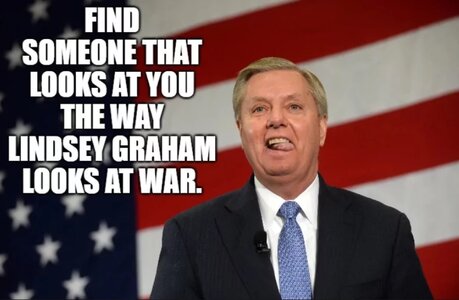
“We’re marching through the world” is not who I want America to be.
Another Neo-con nightmare. We'll f*ck this up as well.
Duke Mu
Iconic Member
- Messages
- 2,414
It's a hallucination. Big oil has been down there. It would require hundreds of billions of $$ to rebuild their drilling and delivery infrastructure. Literally, a pipe dream.1) Steal their oil
2) Get rich(er)
3) See step 1
Duke Mu
Iconic Member
- Messages
- 2,414
We're still on the "what then? stage." A concept of a plan is due any day now...Ive yet to see any semblance of a plan for what the next couple of years in Venezuela will look like let alone Cuba. Topple the regime...and then what?

Share: