When I walk graveyards I wonder about the stories that lie behind them. When I can, I try to pull them forth.
These days I live away from #DeepChatham but I manage frequent visits in my thoughts and every once in a while I make an actual pilgrimage. Driving those narrow back roads through the countryside, “the goodliest soile under the Cope of Heaven” as Ralph Lane called it back in the 16th century, I have found a certain comfort in the splendid isolation of it all.
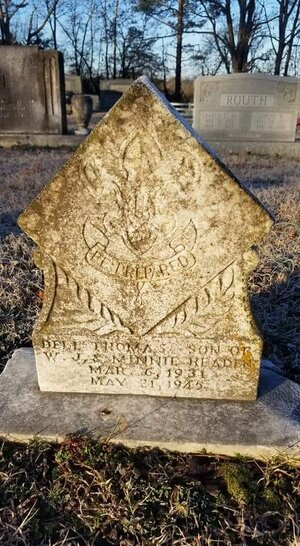
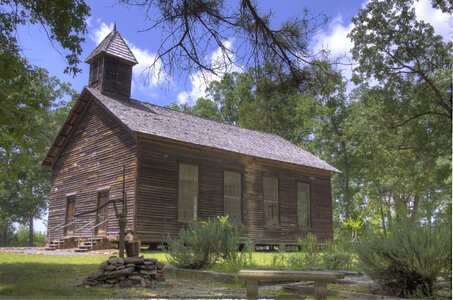
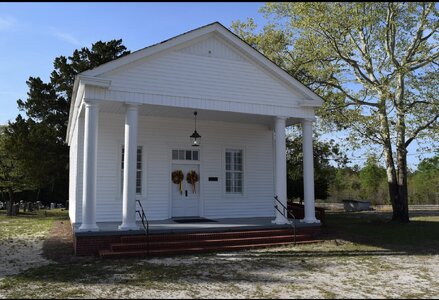
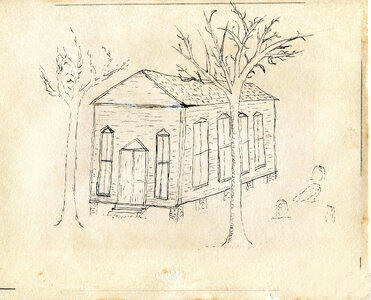
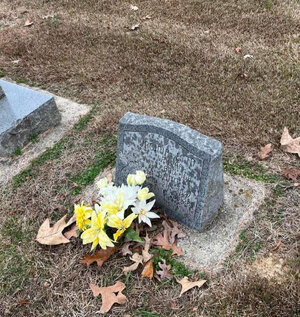
Not long ago I passed by Sandy Branch Baptist Church and visited with my parents and grandparents resting places and left an apple each for Momma and Deddy. Beside the graves of Grandpa Willis and Grandma Ila sits a small marker for Virginia Etta, not quite 10 months old having been born December 28, 1927 and died on September 11, 1928. She was Deddy’s little sister and the fifth child of Willis and Ila. Her death clearly had a lifelong influence on Deddy because in the 1980s he purchased a new headstone for her — 50 plus years later. He was 12 when she passed away.
While we think of The Great Depression as beginning with the Stock Market Crash of October 28, 1929, economic historians point out that hard times had already hit places like rural Chatham County quite a bit before that date and the tobacco farm and shade tree mechanic operation that Grandpa and Grandma had going was probably pretty precariously perched when little Virginia Etta got sick.
Not long after the infant’s death the whole family moved to Durham for a year or so, not able to survive on the farm. Grandpa landed a job mechanicking and Grandma worked cleaning on the Duke campus. Deddy once pointed out their neighborhood to me, his singular experience in urban living of the 93 years he spent on earth. I ramble a bit but these stories connect for me from the small to the large and help make the people of my past more real. Grandpa and Grandma must have been struggling in those days - four children under 12, a pandemic and a World War in their rear view mirror, and ends becoming increasingly hard to meet as all around them the free market was failing. The old rules no longer applied. It was around that time, harvest, that I believe that my Deddy lost all but his thumb on his left hand in a sorghum milling accident.
I only heard him speak details a couple of times of his misfortune. Not once did I ever hear a complaint though the missing fingers required him to do most things thoughtfully. He said he had pushed his hand too far into the machinery as he fed the sorghum and his hand was mangled. I have found photographs in libraries and archives that depict what I have to imagine was the set-up for making molasses on the farm and the machinery has a brutal makeshift quality to it. With little twelve-year-old Alex they drove to Greensboro - 50 miles in a “jalopy” over unimproved highways - to the only hospital. The trip must have been excruciatingly painful and frightening. Imagining that day hurts deep down.
Perhaps the costs from his injury and the death of little Virginia set the family off kilter financially. Such bad luck in the time when crops were gathered and marketed may have meant losses that seemed insurmountable. So Deddy's family left Sandy Branch in #DeepChatham behind for the city of Durham. These days I can only wish that I knew more. I can piece together the stories that I heard and dig through census, property, birth, and death records and read old newspapers but I do have to make some leaps of faith because in the old days I didn’t know enough to ask the best questions.
I have to wonder - because he never said - if when a half-century after the death of his little sister of but just shy of 10 months on earth that he replaced her headstone, the classic Lamb Reclining so prevalent in early 20th century cemeteries marking infant passings, with a new one — that Deddy was still working through that traumatic time. I know that it gave him peace to remember his sister - to show to himself and the world that she was not forgotten.
That fall in 1928 launched Deddy and his family off the farm and everything they knew into the city. Transformed by circumstances — bad breaks both global and personal - they migrated in search of a place that appeared they might better survive. I’m glad they eventually returned to the farm to be sure but how very close they came from everything being so incredibly different then - and ultimately - now. From a baby’s death in the early fall on a dirt-scratch farm in the country to a global economic collapse that sent a farm boy into the city and back again - a story pieced together so not to be lost.[A work in progress]