Modified from a post in 2025 on the state motto.
Did you ever wonder? The motto has always struck me as a good bit of oxymoronic prideful humility — North Carolina is, after all, well-recognized as a paradox of a state. A place where elections that go Jim Hunt and Jesse Helms at once (or trump and Roy Cooper more recently), fights over sauce ingredients (tomato or no), world-class universities and struggling underfunded rural schools, a tobacco-rooted past and a Med Tech present, and historically something called, without a speck of irony — Progressive Plutocrats.
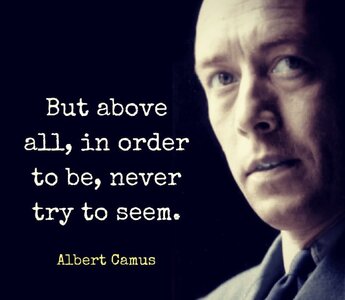
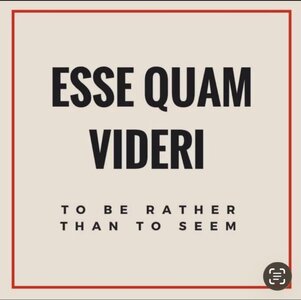
Deepening (Anticipating?) those head-scratchers, in late February (the 21st) of 1893 the N.C. General Assembly adopted ‘Esse Quam Videri’ (To Be, Rather Than To Seem) as the state motto. The erudite phrase has associations with Cicero (de Amnicitia), Aeschylus, Socrates, and in modern times Albert Camus.
The maxim was chosen by that 1893 General Assembly as one “expressive of some noble sentiment and indicative of some leading trait of our people.” Indeed, the 1890s saw the rise of the Populist Party in North Carolina and that 1893 congress, dominated by conservative Democrats must have been aware of the growing dissatisfaction in the outlands. The Farmers Alliance was a major — really THE major — factor in that movement to reform finance, transportation, and education, wrestling control of all three from the state’s, and the region’s, historic elites. The Populist’s national goal, outlined in its Omaha Platform, went so far as to call for government ownership of railroads.
The 1892 election had resulted in the Democrat, Elias Carr only taking 48% of the vote. Carr was a reluctant populist of sorts, a former leader of the Farmers Alliance, but an advocate of stronger railroad regulation rather than the seizure of ownership by the state. Despite his relatively conservative stance, it must have been clear that radical ideas were gaining in The Old North State and perhaps farther afield.
Indeed, an alliance of Populists (young, disgruntled once-upon-a-time Democrats) and Republicans (the party of African Americans in those days in The South) did take control of the NC General Assembly in 1894. This was termed as ‘Fusion’ and held great promise for Progressive policies and true Constitutional Democratic Republicanism in the state. This Fusion would even take the office of Governor in 1896. Outrageously NC conservatives mounted a mercenary and anti-democracy White Supremacist campaign in 1898 and retook the reins of government, installed Jim Crow, and suppressed the African American vote until the 1964 Voting Rights Act began the still ongoing effort to re-enfranchise voters.
But back to 1893…remembering this backdrop of growing challenge to the status quo by Populists, farmers mainly, from The Left, I have long wondered about the choice of “To Be Rather Than To Seem” as a motto. The phrase seems hardly the kind that a traditional ruling class such as still maintained control of the General Assembly in 1893 would promote. It is…well…too human, even humane…it is flush with humanity.
Did some radical thinking slip into the Sanctum Santorum of the conservative plurality in the General Assembly still hanging on in 1893 and infuse those legislators with, at least briefly, a sense of humility such as would have given them pause to choose such a humble, even self-effacing, motto as “Esse Quam Videri?” Or should I imagine the phrase as rather a bone tossed to the masses in a time when the state’s traditional elite were casting about anywhere for painless ways to pacify a populace on the rise? Perhaps I’ve overthought it - only more digging will prove one way or the other. At any rate, it IS my second favorite humble brag — after “A Vale of Humility Between Two Mountains of Conceit” of course.
Classical Origins of the State’s Motto Kudos to @ncpedia for the research into the original texts.
State Motto of North Carolina: Esse Quam Videri