The Babe’s First Home Run: This Date in History

  • Thread starter Thread starter donbosco
  • Start date Start date
  • Replies: 1K
  • Views: 437K
  • Off-Topic 
StreakersAtUNC.jpg

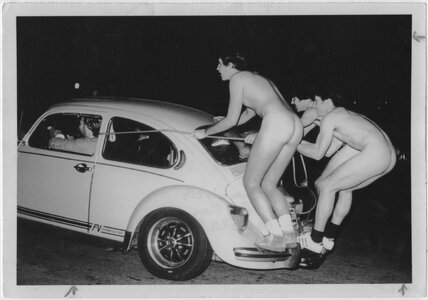
"On March 5, 1974, at the end of “Streak Week,” students at the University of North Carolina at Chapel Hill loosely organized the American Streaker Society. Under a banner proclaiming “Home of the World Champion Streakers,” about 900 naked students ran across campus through a crowd of 6,000 onlookers, accompanied by the University pep band.

Western Carolina University laid claim to the first major streak of the short-lived fad, making North Carolina the streaking epicenter of the nation. All of the major universities in the state and many of the smaller universities and colleges had streaking events on their campuses. Authorities reacted in many different ways to the campus craze, from amused tolerance to arrests and threats of expulsion.

A North Carolina state senator said that he was mulling over the efficacy of introducing a Streaker Ban Bill. It was unnecessary, though, since the phenomenon faded almost as suddenly as it had appeared."
 
StreakersAtUNC.jpg

"On March 5, 1974, at the end of “Streak Week,” students at the University of North Carolina at Chapel Hill loosely organized the American Streaker Society. Under a banner proclaiming “Home of the World Champion Streakers,” about 900 naked students ran across campus through a crowd of 6,000 onlookers, accompanied by the University pep band.

Western Carolina University laid claim to the first major streak of the short-lived fad, making North Carolina the streaking epicenter of the nation. All of the major universities in the state and many of the smaller universities and colleges had streaking events on their campuses. Authorities reacted in many different ways to the campus craze, from amused tolerance to arrests and threats of expulsion.

A North Carolina state senator said that he was mulling over the efficacy of introducing a Streaker Ban Bill. It was unnecessary, though, since the phenomenon faded almost as suddenly as it had appeared."
The annual streak was still happening when I was a freshman at UNC — I was sitting in the car my boyfriend was driving and we got tucked at the crosswalk as the lot of them ran across the crosswalk in front of us, right through the headlights. They were almost buck naked but all were smart enough to wear socks and shoes though.
 
The Saint Anthony Hall streak through the undergrad library during exams was going on into the 1990s I believe.

By the way, according to his own accounts, one of the butts shown here is that of a poster (not here) calling himself BurlingtonHeel.
 
IMG_3855.jpeg

#OTD (March 7) in 1914 19 year old George Herman Ruth hit his 1st Professional HR in Fayetteville and gained the nickname ‘Babe.’ The Baltimore Orioles, his team, was headed to Florida for spring practice and had stopped to play a game. His manager Jack Dunn had legally adopted the young ball player and combined with his playfulness teammates dubbed him ‘Babe.’


The Babe later remarked, “I got to some bigger places than Fayetteville after that but darn few as exciting.”

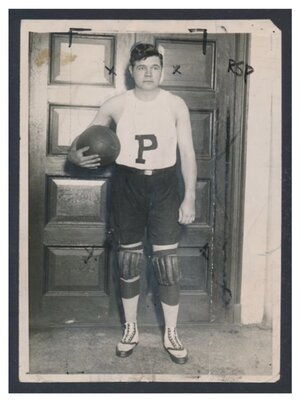
Spring training was then, and is now, underway but as we are in the very heart of the Madness of March at present in honor of the month the photo is from 1921 and shows Babe Ruth in the uniform of the “Ruth All Stars” of Passaic, New Jersey. A newspaper wrote that he played like “an enthusiastic elephant.” That season once on the diamond he hit .378 with 59 home runs for the much hated Yankees.

https://www.ncdcr.gov/.../babe-ruth-gets-his-nickname-in...

For a bit about his time as a cager read here: https://www.sportscollectorsdaily.com/babe-ruth-baller/
 

Let me say this first, I like Redick better now than I did when he was playing for Duke. But at the time, Redick missing that three that would have put Duke up by one with just seconds left on the clock was a cherry on the top of that very delicious treat.
 
"On March 7, 1965, state and local police used billy clubs, whips, and tear gas to attack hundreds of civil rights activists beginning a march from Selma, Alabama, to the state capitol in Montgomery. The activists were protesting the denial of voting rights to African Americans as well as the murder of 26-year-old activist Jimmie Lee Jackson, who had been fatally shot in the stomach by police during a peaceful protest just days before.

The march was led by John Lewis of the Student Nonviolent Coordinating Committee (SNCC) and the Rev. Hosea Williams of the Southern Christian Leadership Conference (SCLC). The marchers crossed the Edmund Pettus Bridge and found themselves facing a line of state and county officers poised to attack. When demonstrators did not promptly obey the officers' order to disband and turn back, troopers brutally attacked them on horseback, wielding weapons and chasing down fleeing men, women, and children. Dozens of civil rights activists were later hospitalized with severe injuries.

Horrifying images of the violence were broadcast on national television, shocking many viewers and helping to rouse support for the civil rights cause. Activists organized another march two days later, and Dr. Martin Luther King Jr. urged supporters from throughout the country to come to Selma to join. Many heeded his call, and the events helped spur passage of the Voting Rights Act of 1965 three months later."

Mar. 7, 1965 | AL Law Enforcement Attacks Civil Rights Activists on 'Bloody Sunday' in Selma


Back
Top