I'm a bit skeptical about comparing hunter gathers living in the interstices of agrarian and technological societies with those who live where that's all there is. It might be that there is no bleed over in historical times but it wouldn't take much for our ideas to be pretty far off. It might even be something as unrelated as the values of cooperation. That's neither a logical leap for a hunter gatherer society or, because of limited resources, likely to last but how would we know what could make a difference .

Navigation
Install the app
How to install the app on iOS
Follow along with the video below to see how to install our site as a web app on your home screen.
Note: This feature may not be available in some browsers.
More options
You are using an out of date browser. It may not display this or other websites correctly.
You should upgrade or use an alternative browser.
You should upgrade or use an alternative browser.
The "Noble Savage"
- Thread starter TarSpiel
- Start date
- Replies: 25
- Views: 598
- Off-Topic

- Messages
- 6,734
I haven't done a deep dive into this, but I'm skeptical we can actually know the answer of whether those societies were happier or better behaved than our own.
I'm not sure how you'd gather data for those folks regarding happiness or behavior in any systematic way.
My deep hunch is that folks then were similar to us because I think that a lot of how we experience happiness is innate to each person and that the average person would behave, within their own milleu, similarly in terms of "good"/"bad" behavior. But I confess that's just a hunch.
I'm not sure how you'd gather data for those folks regarding happiness or behavior in any systematic way.
My deep hunch is that folks then were similar to us because I think that a lot of how we experience happiness is innate to each person and that the average person would behave, within their own milleu, similarly in terms of "good"/"bad" behavior. But I confess that's just a hunch.

Wolfslayer
Well-Known Member
- Messages
- 92
It is my impression that the overwhelming number of Europeans who lived with native Americans, when given the opportunity to return to "civilization" refused. Preferring to stay with their adopted families, clans and tribes, even if they were initially taken against their will.

donbosco
Legend of ZZL
- Messages
- 7,682
I expect most any stats on these topics are going to be "sketchy" from many angles so anecdotal evidence will then become probably more important than it should. Makes for good discussion just the same.
To further muddy the waters, what I keep returning to related to this thread is the query: "Our perceptions may not match those of our ancestors…" -- the assertion made in the Gal Beckerman article from The Atlantic Magazine on the work of historian Rob Boddice. It is behind a firewall but the following blog post provides many excerpts from it and good discussion material that I think is related...
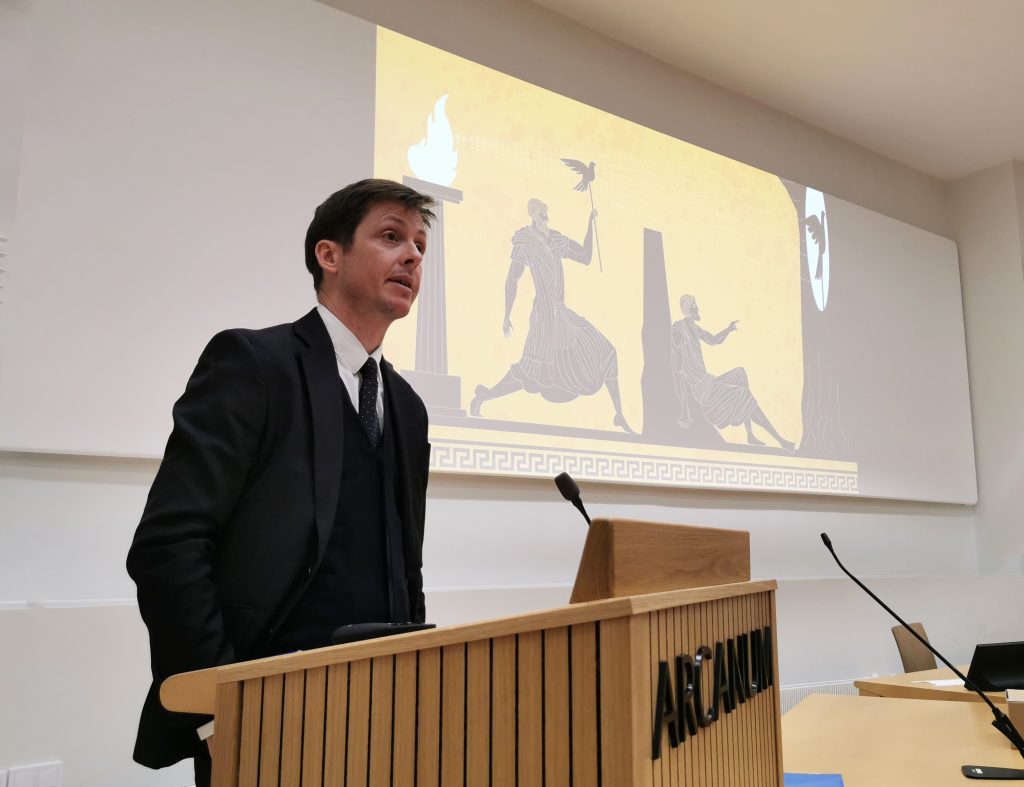
 thewayofimprovement.blog
For example..."[Boddice believes] not only do we imagine other people to have the exact same set of emotions that we have, but we project this thought backwards through time. Love for us can’t be that different from what it meant to Heloise and Abelard writing letters to each other in the 12th century. The laborers who hauled stones to build the pyramids in Giza felt anger that is our anger. We perform this projection on any number of human experiences: losing a child, falling ill, being bored at work. We assume that emotions in the past are accessible because we assume that at their core, people in the past were just like us, with slight tweaks for their choice of hats and standards of personal hygiene.
Boddice starts with the opposite premise, that we are not the same—that the experience of being human in another era, with all of its component feelings and perceptions, even including something as elemental as pain, is so foreign to us as to live inside a kind of sealed vault. “There is nothing about my humanness that affords me insight into humanity,” Boddice has said. Rather than being a constant—extending across space and time—human nature for Boddice is a variable and unstable category, one with infinite possible shades."
To further muddy the waters, what I keep returning to related to this thread is the query: "Our perceptions may not match those of our ancestors…" -- the assertion made in the Gal Beckerman article from The Atlantic Magazine on the work of historian Rob Boddice. It is behind a firewall but the following blog post provides many excerpts from it and good discussion material that I think is related...
How did our ancestors feel?
If you can get behind The Atlantic’s paywall, Gal Beckerman’s piece is worth your time. It focuses on the work of historian Rob Boddice (pictured above), a historian of emotions and sen…
thewayofimprovement.blog
For example..."[Boddice believes] not only do we imagine other people to have the exact same set of emotions that we have, but we project this thought backwards through time. Love for us can’t be that different from what it meant to Heloise and Abelard writing letters to each other in the 12th century. The laborers who hauled stones to build the pyramids in Giza felt anger that is our anger. We perform this projection on any number of human experiences: losing a child, falling ill, being bored at work. We assume that emotions in the past are accessible because we assume that at their core, people in the past were just like us, with slight tweaks for their choice of hats and standards of personal hygiene.
Boddice starts with the opposite premise, that we are not the same—that the experience of being human in another era, with all of its component feelings and perceptions, even including something as elemental as pain, is so foreign to us as to live inside a kind of sealed vault. “There is nothing about my humanness that affords me insight into humanity,” Boddice has said. Rather than being a constant—extending across space and time—human nature for Boddice is a variable and unstable category, one with infinite possible shades."
Native Americans were not, on the whole, hunter gatherers.It is my impression that the overwhelming number of Europeans who lived with native Americans, when given the opportunity to return to "civilization" refused. Preferring to stay with their adopted families, clans and tribes, even if they were initially taken against their will.
Before colonization, key centers of Native American agriculture included the Mesoamerican region (leading to maize, beans, squash), the American Southwest (Ancestral Pueblo, Hohokam, Mogollon with irrigation), the Mississippi River Valley (Mississippian cultures like Cahokia, Hopewell with large towns), the Eastern Woodlands (Hopewell, Iroquois, Cherokee using "Three Sisters" crops and local plants), and the Great Plains (Caddoans, Pawnee, Mandan growing maize along rivers). These cultures developed complex farming systems, from complex irrigation in deserts to large-scale mound building in river valleys, supporting significant populations and trade networks.
Key Agricultural Regions & Cultures:
- Mesoamerica & Southwest: The foundational "Three Sisters" (corn, beans, squash) spread north, developing into distinct systems like the sophisticated irrigation of the Hohokam and the field-building techniques of Ancestral Puebloans.
- Mississippi River Valley (Mississippian Culture): Fertile soils allowed for large, complex societies like Cahokia (largest city north of Mexico) and Hopewell, characterized by massive mounds and extensive trade networks, all centered around maize agriculture.
- Eastern Woodlands: The Eastern Agricultural Complex saw early domestication of plants like sunflowers and goosefoot, later shifting to maize, beans, and squash, supporting groups like the Iroquois and Cherokee.
- Great Plains: Peoples such as the Wichita, Pawnee, Mandan, and Arikara developed farming along rivers, growing maize and other crops

Ddseddse
Iconic Member
- Messages
- 1,557
Hunter gatherer societies had significantly more free time than later agararian societies for sure. Much more than we have today, if fact.
I suspect life was not nasty brutish and short. As much as it was cheerful, placid, punctuated by occasional moments of sheer terror, and short.
I suspect life was not nasty brutish and short. As much as it was cheerful, placid, punctuated by occasional moments of sheer terror, and short.
Share: