superrific
Master of the ZZLverse
- Messages
- 12,501
Interesting. My knowledge of the stats is a bit dated, as I mentioned. I agree with everything you've written there. I think it's just a question of comparing two numbers, empirically determined. It doesn't matter either way, of course. We all know that uninsured care costs a lot.Generally speaking, uninsured delay treatment (additional cost if the delay worsens the diagnosis), seek ambulatory and emergency care at a higher rate (additional cost), and either default on medical debt (additional cost) or just don't pay entirely (additional cost). They are also generally charged more which feeds into the previously noted issues. The cost to the system is when these debts and payments are defaulted as medical care cost increases for everyone. Yes - insured will seek more treatment, but that treatment tends to be preventative which is fairly inexpensive compared with hospitalization. The "unpaid care" component is really where the cost to the system becomes inflationary to the whole.
Hospitals charge more for unisured:

Study: Hospitals Often Charge More to Insured than Uninsured for Same Services
It may seem intuitive that, from one hospital to another, patients encounter different prices for the same procedure. After all, different stores often set different prices for the same goods. But different prices from one patient to another at the same hospital? An economist at Trinity College...www.trincoll.edu
Unpaid debt is rolled into the healthcare system as a whole:
More:
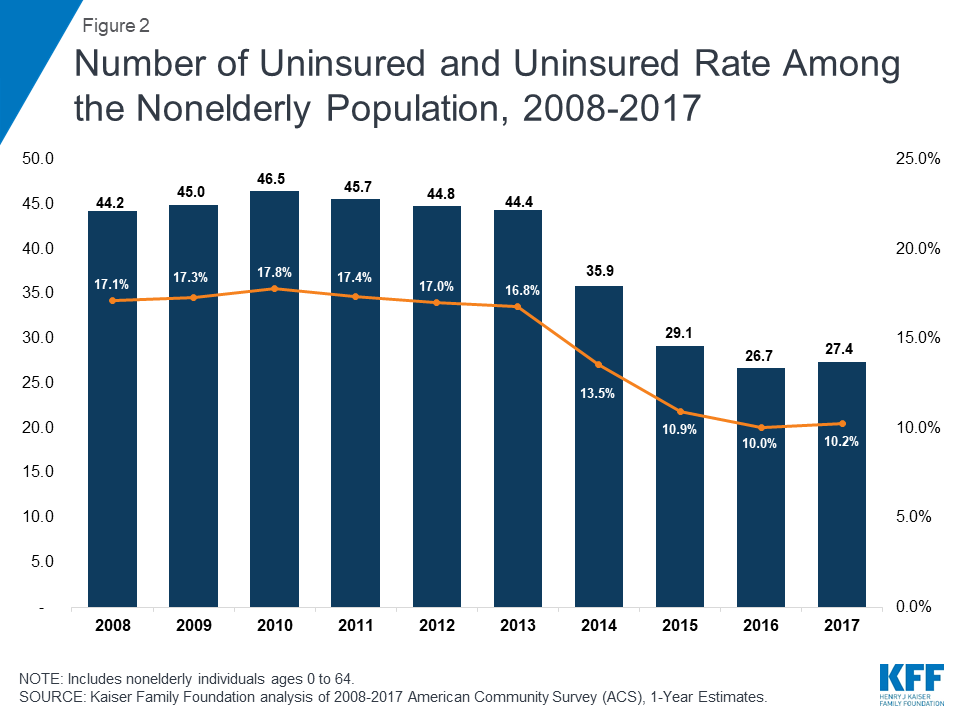
The Uninsured and the ACA: A Primer - Key Facts about Health Insurance and the Uninsured amidst Changes to the Affordable Care Act | KFF
The Uninsured and the ACA: A Primer provides information on how insurance has changed under the ACA and more recent policy changes, how many people remain uninsured, who they are, and why they lack health coverage. It also summarizes what we know about the impact that a lack of insurance can...www.kff.org
It also matters, I think, whether you count life expectancy. I don't remember if the stuff I read did or not. Life expectancy does weird things to calculations. For instance, smokers were wonderful for public finance because, even though they consumed a lot of costs treating their cancers, they died much earlier and thus collected less social security, had less treatment overall, didn't need long-term care as much, etc. etc.