
Navigation
Install the app
How to install the app on iOS
Follow along with the video below to see how to install our site as a web app on your home screen.
Note: This feature may not be available in some browsers.
More options
You are using an out of date browser. It may not display this or other websites correctly.
You should upgrade or use an alternative browser.
You should upgrade or use an alternative browser.
UNC Basketball History
- Thread starter Centerpiece
- Start date
- Replies: 559
- Views: 20K
- Sports


donbosco
Legend of ZZL
- Messages
- 7,556
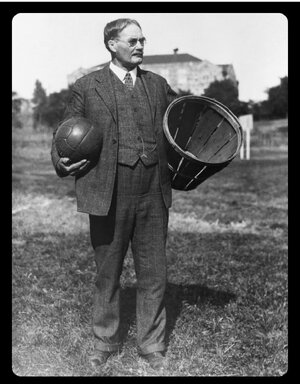
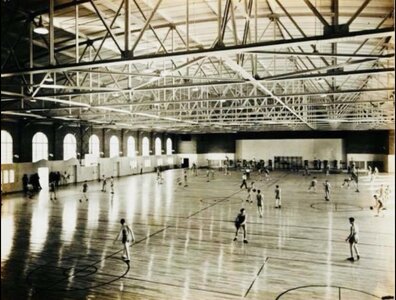
134 Years Ago on December 21, 1891 Dr. James Naismith, teaching at the International YMCA Training School in Springfield, Massachusetts, tossed out the first ball and nailed up a peach basket and the truly beautiful game came into being.
Naismith coached basketball at the University of Kansas. One of his players was Phog Allen, who himself became the coach at Kansas. A young Dean Smith played for Coach Allen, Hubert Davis played for Dean Smith, and the rest is local alma mater history.
Naismith coached basketball at the University of Kansas. One of his players was Phog Allen, who himself became the coach at Kansas. A young Dean Smith played for Coach Allen, Hubert Davis played for Dean Smith, and the rest is local alma mater history.
Attachments
Last edited:
donbosco
Legend of ZZL
- Messages
- 7,556
Please Read “The transparent story of a remarkable life’s journey—to the highest level of success as a basketball player, the NBA. The depths of personal trauma and pain are core moments in this journey Scott Williams takes us on.
Williams always had fire. He writes candidly about his trauma, the death of his parents, and the circumstances that directly impacted the rest of his life. He writes candidly about all of it, including his time on the court with basketball legend, Michael Jordan, and his detailed opinion and comparison of Michael Jordan and Lebron James.
With vulnerability and obvious insight, Williams relates his entire path, including the most painful parts of it, to his three-peat championships and overall success. Williams’ ability to pull inspiration from around him and overcoming obstacles shows his strength. This compelling story shows the true heart and game of Williams.
"Dean Smith, small and confident, sat at our kitchen table. “If you come to the University of North Carolina I can promise you two things: one, you’ll get a quality education and two, you’ll leave a better person,” he said. An education and a better person. No other coach had said that. After my junior year in high school I played well at the Five-Star Camp in Western Pennsylvania and my recruiting letters changed from Cal State-Bakersfield to major programs like UCLA. Among the letters was a note from Dean Smith, Head Coach, University of North Carolina, the man who would change my life. The man who would save my life. Coach Smith was different from the other coaches who visited. Jim Valvano and his assistant coach, Tom Abatemarco, got into an argument in my living room when Abatemarco corrected Valvano. They were nose to nose. I knew I didn’t want that. I’d had enough yelling in my life. What stood out about Coach Smith, sitting at our kitchen table, was how down-to earth he was. He had won a national championship and an Olympic Gold Medal. He had coached numerous pro players, including my hero James Worthy and the current NBA sensation Michael Jordan. And yet Coach Smith wasn’t over-selling the program. He wasn’t meek or soft-spoken but he also wasn’t over-the-top. He was confident and humble at the same time. A quality education and a better person. That’s all Coach Smith promised."
Williams always had fire. He writes candidly about his trauma, the death of his parents, and the circumstances that directly impacted the rest of his life. He writes candidly about all of it, including his time on the court with basketball legend, Michael Jordan, and his detailed opinion and comparison of Michael Jordan and Lebron James.
With vulnerability and obvious insight, Williams relates his entire path, including the most painful parts of it, to his three-peat championships and overall success. Williams’ ability to pull inspiration from around him and overcoming obstacles shows his strength. This compelling story shows the true heart and game of Williams.
"Dean Smith, small and confident, sat at our kitchen table. “If you come to the University of North Carolina I can promise you two things: one, you’ll get a quality education and two, you’ll leave a better person,” he said. An education and a better person. No other coach had said that. After my junior year in high school I played well at the Five-Star Camp in Western Pennsylvania and my recruiting letters changed from Cal State-Bakersfield to major programs like UCLA. Among the letters was a note from Dean Smith, Head Coach, University of North Carolina, the man who would change my life. The man who would save my life. Coach Smith was different from the other coaches who visited. Jim Valvano and his assistant coach, Tom Abatemarco, got into an argument in my living room when Abatemarco corrected Valvano. They were nose to nose. I knew I didn’t want that. I’d had enough yelling in my life. What stood out about Coach Smith, sitting at our kitchen table, was how down-to earth he was. He had won a national championship and an Olympic Gold Medal. He had coached numerous pro players, including my hero James Worthy and the current NBA sensation Michael Jordan. And yet Coach Smith wasn’t over-selling the program. He wasn’t meek or soft-spoken but he also wasn’t over-the-top. He was confident and humble at the same time. A quality education and a better person. That’s all Coach Smith promised."
Amazon.com: Through the Fire: A Memoir of Trauma and Loss, Basketball and Triumph: 9798387791291: Williams, Scott, Guest, Ben: Books
Amazon.com: Through the Fire: A Memoir of Trauma and Loss, Basketball and Triumph: 9798387791291: Williams, Scott, Guest, Ben: Books
www.amazon.com

- Messages
- 3,587
Fun facts: Scott Williams is one of only four players to have played with both Michael Jordan and LeBron James. Of those four players, three are Tar Heels: Williams, Brendan Haywood, and Jerry Stackhouse. The one who wasn’t a Tar Heel was Larry Hughes. Of those four players, Williams was the only one to play with Jordan on the Bulls (the others played with Jordan on the Wizards).Please Read “The transparent story of a remarkable life’s journey—to the highest level of success as a basketball player, the NBA. The depths of personal trauma and pain are core moments in this journey Scott Williams takes us on.
Williams always had fire. He writes candidly about his trauma, the death of his parents, and the circumstances that directly impacted the rest of his life. He writes candidly about all of it, including his time on the court with basketball legend, Michael Jordan, and his detailed opinion and comparison of Michael Jordan and Lebron James.
With vulnerability and obvious insight, Williams relates his entire path, including the most painful parts of it, to his three-peat championships and overall success. Williams’ ability to pull inspiration from around him and overcoming obstacles shows his strength. This compelling story shows the true heart and game of Williams.
"Dean Smith, small and confident, sat at our kitchen table. “If you come to the University of North Carolina I can promise you two things: one, you’ll get a quality education and two, you’ll leave a better person,” he said. An education and a better person. No other coach had said that. After my junior year in high school I played well at the Five-Star Camp in Western Pennsylvania and my recruiting letters changed from Cal State-Bakersfield to major programs like UCLA. Among the letters was a note from Dean Smith, Head Coach, University of North Carolina, the man who would change my life. The man who would save my life. Coach Smith was different from the other coaches who visited. Jim Valvano and his assistant coach, Tom Abatemarco, got into an argument in my living room when Abatemarco corrected Valvano. They were nose to nose. I knew I didn’t want that. I’d had enough yelling in my life. What stood out about Coach Smith, sitting at our kitchen table, was how down-to earth he was. He had won a national championship and an Olympic Gold Medal. He had coached numerous pro players, including my hero James Worthy and the current NBA sensation Michael Jordan. And yet Coach Smith wasn’t over-selling the program. He wasn’t meek or soft-spoken but he also wasn’t over-the-top. He was confident and humble at the same time. A quality education and a better person. That’s all Coach Smith promised."
Amazon.com: Through the Fire: A Memoir of Trauma and Loss, Basketball and Triumph: 9798387791291: Williams, Scott, Guest, Ben: Books
Amazon.com: Through the Fire: A Memoir of Trauma and Loss, Basketball and Triumph: 9798387791291: Williams, Scott, Guest, Ben: Bookswww.amazon.com
donbosco
Legend of ZZL
- Messages
- 7,556
Brown fondly reflects on playing for UNC in Smith’s early years
- By PAUL SCHENKEL paul@thepaper.media
- Jun 9, 2025
"The name Dean Smith still ranks among the state’s heavyweights even 10 years after the legendary former University of North Carolina basketball coach’s death.
But the name might not be heralded that way today if not for the impact made by the Tar Heels’ recruiting class of 1965, which redirected the path of UNC basketball, and of which Valdese native Joe Brown was a member.
&&&&&&&&&&&&&&
[Joe] Brown did more than just learn the game, he went on to excel in it at Valdese High School, where he recalls he could dunk as a 6-foot-1 Tigers freshman playing his first of four varsity seasons.
Then after Brown’s sophomore season in high school under Valdese coach Ed Abee — by which time Brown had grown to about 6-4 — his family made a decision that would change his life.
“Earl Spencer, president of the Valdese Manufacturing Company — we called it the cotton mill — talked my dad into sending me to Coach Smith’s camp in 1963,” Brown said in a recent interview with The Paper.
“And it was a lot of money to go to his camp, for us anyway, but dad sent me down there. So, my first meeting with Coach Smith occurred when I was at his camp that summer. … That was the first time I’d even been to Chapel Hill.”
Smith didn’t let Brown walk away empty-handed from his first trip to UNC.
“The day I left camp, Coach Smith offered me a full scholarship,” Brown said. “That was pretty impressive for a 16-year-old kid. He did it in an unusual way. He called me into his office and gave me a blank grant-in-aid form. And he said we can’t do anything with this right now, but when you’re a senior, I want you to sign this form and come to the University of North Carolina.”
Brown said Smith was in touch with him for the next two years, “and when I graduated, of course, signed the grant-in-aid.”
&&&&&&&&
Those late 1960s’ Tar Heels didn’t just set Smith’s name on a path toward immortality, they could still be defined as the golden age for the sport all-time even at Carolina, one of the proudest programs in the nation.
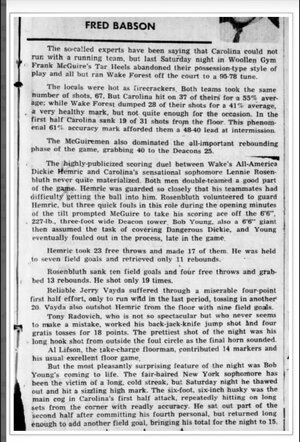
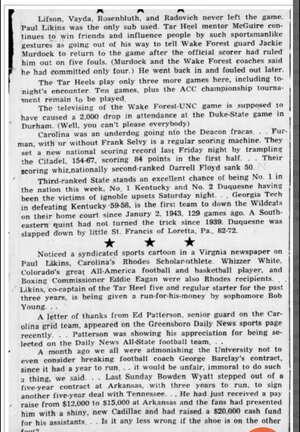
From a team aspect, UNC won three consecutive ACC regular-season championships and ACC Tournament championships and appeared in three straight Final Fours during Brown’s three seasons of varsity eligibility spanning the 1966-67 through 1968-69 seasons, a feat that stands alone in college hoops history before or since.
“It was quite a feat. In those days, you had to win the ACC Tournament to go to the NCAA Tournament,” said Brown, who was considered among the top sixth men in the sport by writers of the era. He averaged over 6 points and 4 rebounds in his best statistical season as a UNC junior, playing in all 32 games as UNC fell to Lew Alcindor and UCLA in the NCAA title game.
Brown said he recently found a playing card in the memorabilia room at his house that featured a picture of the team after its third ACC championship with an inscription on the back detailing the historic nature of those Carolina teams’ accomplishment.
“I don’t know that we’ll see it done again,” Brown said. “Maybe we will. Never say never, but it’s been over 55 years.”
- Messages
- 1,200

ACCN's "We're No. 1: 1993 UNC Tar Heels" Coming Jan. 10 - University of North Carolina Athletics
The new documentary chronicling the NCAA title-winning Tar Heels men's basketball team will debut Saturday, January 10 at 8 p.m. on ACCN.
Really good documentary on the 1993 UNC championship team and season. Was bittersweet at times with Montross playing such a major role. Had some sad moments. But was really great to see some of the inside moments of that season. Brought back some great memories. Was glad to see they had a good segment on the comeback against FSU. Plus I had seats in section 110 A for that game so to see myself on the big screen from 32 years ago was so very surreal
 Plus watching the championship game in Carmichael. Such a great season and great memories. The team did it for Dean
ETA: if you haven’t seen it, it is on again 1/19 and 1/20 on the ACCN.
Truly outstanding. From the looks of it, the roundtable session at TOPO must have been recorded on the weekend of the Montross camp. Reese, Phelps, and Donald Williams weren't there for that but each were interviewed as part of the show.ACCN's "We're No. 1: 1993 UNC Tar Heels" Coming Jan. 10 - University of North Carolina Athletics
The new documentary chronicling the NCAA title-winning Tar Heels men's basketball team will debut Saturday, January 10 at 8 p.m. on ACCN.goheels.com
Really good documentary on the 1993 UNC championship team and season. Was bittersweet at times with Montross playing such a major role. Had some sad moments. But was really great to see some of the inside moments of that season. Brought back some great memories. Was glad to see they had a good segment on the comeback against FSU. Plus I had seats in section 110 A for that game so to see myself on the big screen from 32 years ago was so very surreal
ETA: if you haven’t seen it, it is on again 1/19 and 1/20 on the ACCN.
Crazy to think that's 35 years ago. Wow.
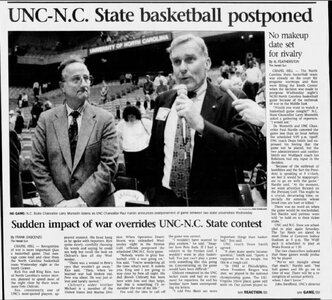
On this day in 1991.
donbosco
Legend of ZZL
- Messages
- 7,556
Crazy to think that's 35 years ago. Wow.
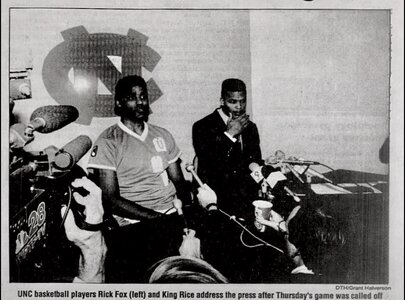
The story about Chilcutt's brother and the comments from Fox and Rice are things of the past.
donbosco
Legend of ZZL
- Messages
- 7,556
donbosco
Legend of ZZL
- Messages
- 7,556
UNC basketball memories of first game at Smith Center might surprise some Tar Heels
"Steve Hale felt like a stranger in the Smith Center.
It’s been 40 years since UNC basketball played its first game at the Dean Dome. On Jan. 18, 1986, the top-ranked Tar Heels had a dazzling debut against No. 3 Duke with a 95-92 victory in front of a crowd of more than 21,000 fans.
Hale, a senior on that 1985-86 squad, had a career-high 28 points, along with five assists, four rebounds and three steals. But that matchup against the Blue Devils isn't what he remembers most about opening the new arena.
“The main thing was we hadn’t been in the Smith Center, hardly at all. I was actually talking to one of my kids about it over Christmas. I got lost, I didn’t know where anything was, ‘cause we practiced at Carmichael (Auditorium) and then we played at Carmichael,” Hale told the USA TODAY Sports Network in a phone interview.
“. ... It was huge, I couldn’t figure out how to get up to the court and not a lot of it was built. The gym was built, but downstairs there was the locker rooms and I just remember it being a maze. So, it was really surreal in that it didn’t feel like a home game, ‘cause it wasn’t really our home. It was just so huge compared to Carmichael. At Carmichael, it was a sea of people."
donbosco
Legend of ZZL
- Messages
- 7,556
Recent History

Dream On: From Backyard to Biscuits, A Tar Heel Basketball Tale
Pre-orders arrive end of January! From empty gyms at dawn to cracked driveways at dusk, Jackson Watkins always dreamed of playing basketball with North Carolina emblazoned across his chest. His imagination would run wild: every shot was taken in front of a roaring crowd, every free throw with...
dreamonbook.myshopify.com

Oddball
Distinguished Member
- Messages
- 385
Not sure best place to post, but love it that Roy and Tyler are speaking out on this. Having an on campus arena is a big deal, even if it does not make the most money.

 www.wral.com
Renovate, don’t relocate: UNC basketball legends want to keep Smith Center on campus
Former North Carolina coach Roy Williams and former star Tyler Hansbrough released videos in support of keeping the Tar Heels’ basketball arena on campus.
www.wral.com
ole howard1
Well-Known Member
- Messages
- 67
I was there for it. I live in SC and don’t go to many UNC games.
On this day in 1991.
In fact, I have not been to the Dean Dome in long time; most recent game I saw in Chapel Hill was Wofford defeating UNC in Carmichael in 2019. That was something.
But my brother was in law school there and got me and our dad tickets. Walking toward the Smith Center and then seeing people walking away from the arena was super weird. Surreal.
On the way home the next day, we stopped at a Hardee’s (I think that’s it) for breakfast, and there was a woman outside with a homemade sign with a middle finger drawing and the message, “Up you’re, Saddam!”
My dad laughed. “This is like a Clemson football game for these people.”
Maybe foreshadowing some stuff…
We got to go back for the make-up game. Great seats, exciting game.
Share: