UNC System News -- Realigning the UNC System to meet NC workforce needs

  • Thread starter Thread starter donbosco
  • Start date Start date
  • Replies: 30
  • Views: 934
  • Politics 
The system’s definition has received mixed feedback, with the likes of the AAUP and the ACLU saying it is too vague and could actually lead to more restrictions on speech.

“The academic freedom policy here does not define ‘political activity’ or ‘pedagogical connection,’ rendering it likely unconstitutionally vague and overbroad. There are many ways a faculty member may find themselves teaching content beyond the course description that could involve the expression of a political viewpoint — during a robust discussion guided by students, for example,” a recent letter from ACLU of North Carolina reads.

“The policy seems to require faculty members to abruptly cut off genuine intellectual curiosity and academic discourse simply because it may touch on relevant subjects outside the course description. … Faculty and students alike must be free to express their views. We urge the Board of Governors to reaffirm the necessity of defending speech and academic freedom.”

The university system has championed the policy specifically because it creates clear guidelines on what behavior is and isn’t protected by academic freedom. Hatcher acknowledged this and other aspects of the policy might seem appropriate but that expertise and academic training should be what decides what is taught and researched, not policies such as this one.

“It should never actually be any administrator’s role to come in and say what can and cannot be taught,” Hatcher said. “So it kind of looks OK on paper, but the crux of it is that it’s paving the way for censorship in North Carolina that’s actually faster than Texas, Florida, Oklahoma.”

Senior Vice President for Academic Affairs David English told reporters the policy was driven by faculty and staff and they were able to incorporate almost all of the Faculty Assembly’s feedback, but he knows in an organization as large as the UNC System, not everybody will agree. Despite concerns from protesters that the changes made between January and February’s meetings were done so outside of the typical order, he and Tripp said proper measures were taken.

“We’re thankful for those that came today to share their voice, to share their passion and that they engaged in a respectful way which demonstrates the type of discourse and debate that we’re looking to foster in the UNC System,” he said.

Landmark tuition increases​

In addition to defining academic freedom, the university system voted to raise tuition for the first time since 2017. Most universities will raise undergraduate, in-state tuition by 3%. Exceptions include Appalachian State University and UNC-Asheville which will only be raised by 2.5% and 1.5%, respectively. Winston-Salem State University will also not raise undergraduate in-state tuition at all, and the universities in the NC Promise program will continue to see their tuition set by the legislature.

Chair of the Board Wendy Murphy, who wrote a column for the News & Observer this week on why increases were on the table, told reporters she is concerned the increases will be burdensome for North Carolinians, but the university system ultimately has to focus on affordability and sustainability. She emphasized it will not affect current students, who will continue to pay the price of tuition as it was upon their enrollment.

The motion passed with just one negative vote from prominent board member and former state representative Art Pope who has served in the role since 2020.

Pope specifically opposed the raising of undergraduate in-state tuition, citing current financial strain on North Carolinians and decreased income since stimulus payments from the pandemic ended in 2022. He voted against tuition increases but in favor of fee increases.

“Everybody understands the rising costs that we’ve all experienced even in our households,” Murphy said.

“But the board has done a lot of work with President Hans on cutting administrative jobs and we’ve looked at the way they’re doing things on campuses and we’ve created the best practices and efficiencies and we’ll continue to do that, but we’ve got to maintain what everyone expects from the university system.”
 
Chancellor Lee Roberts spoke to UNC’s Faculty Council about the University’s direction, from enrollment growth and rising STEM demand to affordable housing and budget pressures. We encourage you to watch his presentation and reflect on what it signals for UNC. https://ow.ly/BRqy50YmA2r #UNC #HigherEd

 
Chancellor Lee Roberts spoke to UNC’s Faculty Council about the University’s direction, from enrollment growth and rising STEM demand to affordable housing and budget pressures. We encourage you to watch his presentation and reflect on what it signals for UNC. https://ow.ly/BRqy50YmA2r #UNC #HigherEd


Thank you for the link to Roberts' presentation. It was very informative and a lot to digest. The provost was up next I think to discuss issues surrounding academic freedom. Is there a link for his presentation ?
 
Thank you for the link to Roberts' presentation. It was very informative and a lot to digest. The provost was up next I think to discuss issues surrounding academic freedom. Is there a link for his presentation ?

The meetings do not appear to be available...at least not without request or by being there.
 
Oh, yeah. This "you must publish your syllabi and allow yourself to be recorded" kick is nothing more than a way for right-wing busybodies with nothing else to do in their lives, or for more organized right-wing "watchdog" groups, to get professors they don't like fired, or at least reprimanded. It's "gotcha" education and "parental rights" raised to an absurd level. Imagine knowing that everything you say in public is being recorded by people who likely don't like you and want to get you into trouble or even fired from your job for simply saying something they disagree with, and so they can gain publicity for themselves as a "social media warrior", just like the student and mom in Oklahoma who raised a stink about a professor giving the poor little victim a zero on a paper. In NC now you can be fired or at least reprimanded just for what you say. Dark days in American higher ed.
I agree with all of this.

The other thing it does is give reason to push those professors with other options out of the public university sphere into private universities where they won't face this kind of hardship. The threat of this kind of event happening will be enough to cause some folks to take advantage of other opportunities and leave public universities while these kinds of rules exist and that sort of self-selection out is also a win for the mouth breathers.
 

Realigning the UNC System to meet NC workforce needs​

Review shows one degree program after another in which UNC System isn’t producing as many graduates as growing NC economy requires.

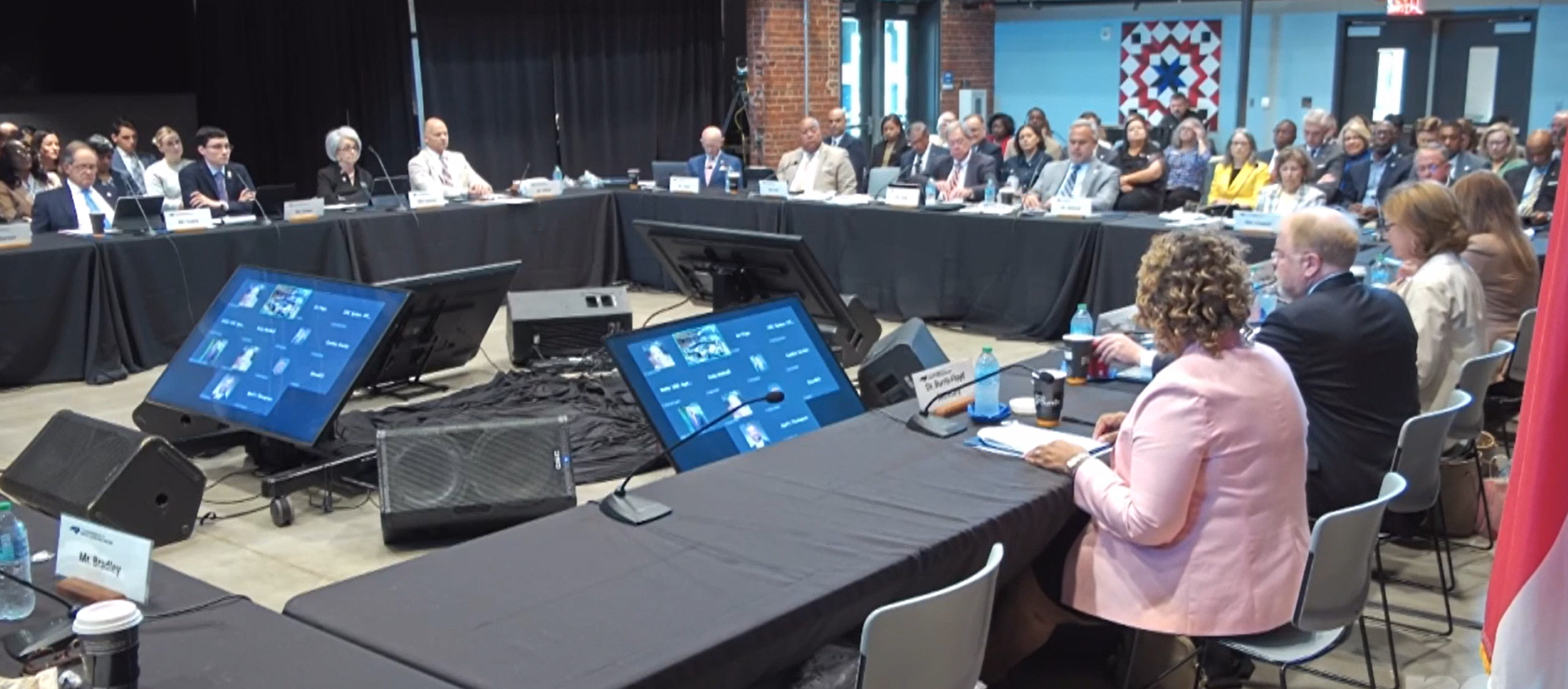
Despite seemingly endless reports that entry-level jobs are nearly impossible for new graduates to find today in the “grimmest job market in years,” a new report by the UNC System shows North Carolina has a surplus of jobs and not enough degrees to match.

It’s the first workforce alignment review that the UNC System says it will continue to complete every other year.

[Subscribe for FREE to Carolina Public Press’ Daily, Weekend and Election 2026 newsletters.]

The UNC System provides 71% of degrees at the bachelor’s level and above given by North Carolina institutions, so the report is intended to ensure its institutions are accurately meeting the needs of the state.

The UNC System findings​

For academic years 2020-21 through 2024-25, more than 64,000 degrees were completed on average each year, 73% of which were bachelor’s degrees. Business field degrees accounted for more than 11,000 of the total degrees per year and health professions were a close second at around 8,000 per year.

“The fields of study experiencing the largest growth in total number of degree completions across all levels over the past five years are Computer Science, Physical and Life Sciences, Social Sciences, and Business,” the report states.

“These trends suggest students are self-selecting fields more technical or quantitative in nature — such as computer science, business economics, and neuroscience.”

Still, the report found a gap between the number of bachelor’s degrees the UNC System is awarding compared to the current workforce needs of the state — according to data from various agencies including the state’s Labor and Economic Analysis Division, National Student Clearinghouse and the U.S. Bureau of Labor Statistics — in several key areas like accounting, general education, nursing, music, psychology, electrical and mechanical engineering. Those each have several hundred fewer undergraduate degree completions than the jobs are in demand.

Other fields like finance, computer and information systems, theology and religious vocations, physics, most engineering fields and most education subjects had smaller but notable gaps in supply of degrees versus demand.

The System’s Vice President for Strategic Initiatives Mary Varghese said in a Board of Governor’s committee meeting Wednesday that for every singular job opening in the state from new job growth, there are another five job openings to fill from retirement and other departures from the workforce. So she figured the gap in degrees would be there, just not that it would be quite so large.

“When I looked at the outcomes of the workforce alignment model where we inputted all the job projections and the number of grads coming out of our programs, I expected to see that we would need to grow a number of degrees,” she told the committee.

“But I actually expected it to be limited to a few programs, so when I saw that we needed to grow in so many academic programs, we had to pull back and ask ‘What is going on here?’”

What they found is that North Carolina’s job growth isn’t limited to a certain field like technology or health care, but it’s distributed across many industry sectors and occupational groups, meaning employers are looking for a diverse set of skills and credentials not found in any one particular degree.

Other factors like North Carolina’s job growth of about 4.3 million jobs in January 2023, the state’s lower unemployment rate and higher wage gains than other parts of the country, a migration-driven population boom, but also an aging population, all have unique but quantifiable effects on the labor market.

Just one area has an oversupply of bachelor’s degrees — Physical Fitness, Parks, Recreation and Leisure by 1,001. The report states the System has seen a total 23% decline in bachelor degree completions in Fitness and Recreation over the past five years, and UNC schools have discontinued six bachelor degree programs in the field since 2021.

Hopeful for the future​

Several initiatives in the works should help reduce projected gaps in the coming years, the report states. The General Assembly provided the UNC System with $40 million in 2023 to increase the development and expansion of health care degrees. The UNC System used $29 million of that in 2024 to expand nursing education at 12 institutions. Its goal is to increase the outcome of nursing degrees by 50%.

“Grant funds are being used to support activities such as hiring more faculty to open more spots to qualified applicants, expanding lab space and clinical placements, and expanding mentoring and tutoring for pre-nursing students,” the report states.

“This initiative and other efforts to increase the education and retention of skilled nursing professionals across the state are beginning to make positive strides.”

In 2021, the General Assembly also provided $125 million toward the “Engineering NC’s Future” initiative to increase the state’s engineering talent on account of companies like Apple, Toyota and Honda announcing their interest in establishing roots in the state.

These funds went directly to engineering schools at NC State, UNC-Charlotte and NC A&T. Subsequently, enrollment in undergraduate engineering programs in the state has increased by 22% between 2020 and 2025.

The education sector has a projected total gap of roughly 1,200 bachelor’s and 600 master’s degrees across disciplines. The report states the significant workforce gap is likely due to factors like rapid population growth requiring more educators to essentially keep up with growing class sizes, retiring teacher professionals and simply a waning demand for education programs or a teaching career.

“Education is the field where UNC System bachelor’s degree completions are declining most rapidly (…)” the report states. “Also contributing to the workforce shortage are high attrition rates as educators leave the profession for other professions, resulting in increased turnover vacancies to be filled.”

But the saving grace, Varghese said, is the NC Teaching Fellows program, a forgivable loan program that provides tuition assistance of up to $10,000 per year for those that commit to teaching elementary education, special education or STEM in a public school in the state.

Over 90% of students in the program continue on in their education program compared to other non-fellow students in education majors, where there is a high transfer-out rate, Varghese said. As of this January, 82% of fellows who completed the program currently teach in a North Carolina public school.

Another possibility the System is currently exploring is 90-credit-hour undergraduate degrees. When the System announced it was accepting proposals for potential programs, it noted it would prioritize ones with high workforce needs according to the report like business, computer sciences, health professions and various arts and humanities majors.

“We see the strong job growth and we also see in that data 85% of five-stars jobs in our state — jobs that have the high-star rating, jobs that have strong wages and strong job-growth — those are jobs that require at least a bachelor’s,” Varghese said.

“So we want to ensure, and I know the focus of the System and the state is in ensuring, more North Carolinians are accessing the UNC System in order to get these jobs.”

Cont.
 

Upcoming legislative asks​

The report’s findings come at a critical time for the UNC System as it prepares to ask the legislature for a whopping $158.8 million in enrollment funding to account for the historic growth it’s experienced since 2024.

At a committee meeting Wednesday, chancellors Kelli Brown and Sharon Gaber of Western Carolina University and UNC-Charlotte, respectively, echoed the importance of the university system receiving the enrollment funding, particularly after not receiving any last year.

“Over the past decade, Western Carolina University has experienced meaningful enrollment growth, and more importantly, a strategic transformation in the students we serve and how we support them,” Brown said.

Brown noted WCU’s size of its freshman class, predicting that next year’s could be the biggest in the university’s history, along with growth of its transfer and online student populations.

“This progress is not accidental — it comes from intentional investment, especially from and through enrollment growth funding which has helped us align our academic offerings with student demand and workforce needs,” she said.

The report makes it clear that despite the UNC System’s historic enrollment cycle, there is still not only room, but a need for more graduates in the workforce. Continued investment in enrollment growth will be essential to fulfilling that aspect of the UNC System’s mission and beyond, Brown said.

At UNCC, nearly 40% of last fiscal year’s enrollment funding is supporting growth in engineering and nursing, two of the state’s highest areas of need according to the report, Gaber said.

Enrollment at UNCC has steadily risen over the past several years, reaching a school record of 32,207 students last fall. But that kind of growth without funding creates strain, Gaber said. The university also has one of the highest student-to-faculty ratios of the UNC System institutions — which the university said was 20:1 in 2023, slightly above the national average of 18:1 — meaning it educates more students per faculty member than most universities.

“Without enrollment funding these pressures intensify,” Gaber said.

“It limits our ability to serve North Carolina students already enrolled in high demand programs. It constrains continued growth, which we need, in engineering, nursing, AI and business. It reduces our ability to add faculty, expand course availability and it slows recent gains in retention and graduation rates.

“UNC-Charlotte’s continuing to make every effort to grow responsibly, make sure we are aligning programs with workforce demand and maintain affordability, and we all know that enrollment funding is what allows the university to continue doing that at the scale that North Carolina requires.”

 
Back
Top