
Navigation
Install the app
How to install the app on iOS
Follow along with the video below to see how to install our site as a web app on your home screen.
Note: This feature may not be available in some browsers.
More options
You are using an out of date browser. It may not display this or other websites correctly.
You should upgrade or use an alternative browser.
You should upgrade or use an alternative browser.
Mental health...
- Thread starter UNCatTech
- Start date
- Replies: 123
- Views: 5K
- Off-Topic

- Messages
- 6,678
It's been about a decade since I read it, but it's a great book.I'm listening to "The Body Keeps the Score" on audible.
It's amazing and scary how trauma impacts people. Just another reason that we should avoid wars, etc.
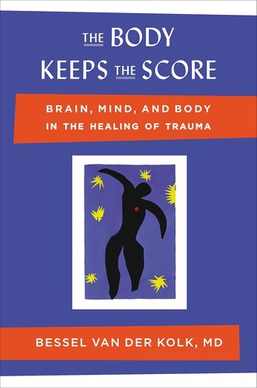
The Body Keeps the Score: Brain, Mind, and Body in the Healing of Trauma by Bessel van der Kolk is a groundbreaking book that explains how trauma physically reshapes the brain and body, affecting everything from memory and concentration to relationships and self-control. Drawing on neuroscience and decades of clinical experience, van der Kolk argues that trauma is stored in the body and requires holistic, body-based therapies like yoga, EMDR, neurofeedback, and mindfulness to heal, moving beyond traditional talk therapy to help survivors reclaim their lives.
Key themes and concepts
Why it's significant
- Trauma's physical impact:
Traumatic stress changes the brain's limbic system and brainstem, compromising the ability to feel pleasure, engage with the world, and trust others.
- Beyond the mind:
Trauma isn't just a mental event; it's a physiological one, stored in the nervous system, which is why the body "keeps the score".
- Holistic healing:
The book advocates for treatments that help people reconnect with their bodies, such as trauma-sensitive yoga, neurofeedback, meditation, and theater, to activate the brain's natural neuroplasticity.
- Power of relationships:
It emphasizes that relationships are both a source of trauma and a key to healing, offering hope for recovery.
- Bestselling and influential:
A #1 New York Times bestseller, it's considered a seminal work in trauma research and treatment.
- Accessible science:
It translates complex neuroscience into an accessible narrative, using case studies to illustrate how trauma affects individuals and societies.
- Hope for recovery:
It provides a hopeful message by detailing innovative and traditional methods that help survivors move from a state of helplessness to one of empowerment.
I'm definitely a victim of that mechanism. Many years of being startled randomly numerous times per day and night from peaceful existence to being thrust in the midst of horrific scenarios 5 minutes later. It jacked me up badly a few years ago to the point where I was almost suicidal. On my days and nights off I was a shell of myself and was an anxious, twisted wreck. I didn't want to kill myself but I had no more desire to live. Thankfully I got help and a new perspective on things. Now I value every single day.I have heard a lot lately about the nervous system playing a big factor in mental health, and how people get stuck in fight or flight mode and need a "reset" of their nervous system.
By "reset" do you mean something carby while on the couch in front of the boob tube?I have heard a lot lately about the nervous system playing a big factor in mental health, and how people get stuck in fight or flight mode and need a "reset" of their nervous system.
Share: