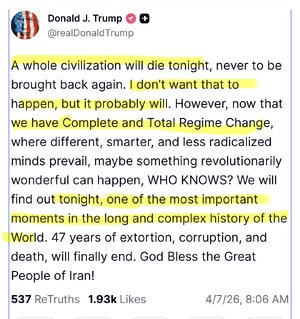
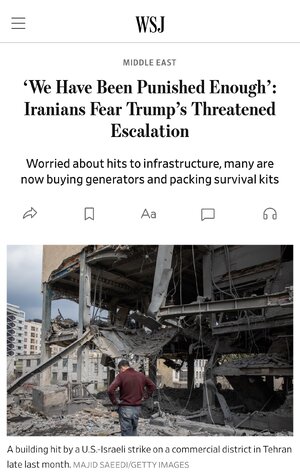
“… Iran entered the war in the grip of a
severe economic crisis and with anger at the government running high. A collapsing currency and spiraling inflation brought on by years of sanctions and government mismanagement
sparked protests. The violent suppression of the uprising left even more people angry with the government.
Many welcomed the war when it started. The regime’s survival, despite more than 20,000 strikes by the U.S. and Israel, and the damage done by those strikes have changed many Iranians’ minds.
Many people fear the regime will emerge from the attacks hardened and embittered. One man from Tehran said others worry Trump’s threatened strikes could push it to collapse and leave Iran a failed state.
Iraq launched attacks on the Tehran during the Iran-Iraq war of the 1980s, but that was primarily a land war fought far from the capital. Last year’s offensive by Israel lasted 12 days.
Iran’s government
has shut down internet access, so most Iranians have no big picture of the war. The Tehran residents interviewed for this article are among a small minority who gained access to the internet using VPNs.
They said most of the airstrikes appear to have targeted military, security and government installations. The problem is ordinary residents of the capital have no way of knowing where every single government building is or where officials who might be targets of airstrikes actually live.…”