
Navigation
Install the app
How to install the app on iOS
Follow along with the video below to see how to install our site as a web app on your home screen.
Note: This feature may not be available in some browsers.
More options
You are using an out of date browser. It may not display this or other websites correctly.
You should upgrade or use an alternative browser.
You should upgrade or use an alternative browser.
Mental health...
- Thread starter UNCatTech
- Start date
- Replies: 163
- Views: 5K
- Off-Topic

- Messages
- 6,698
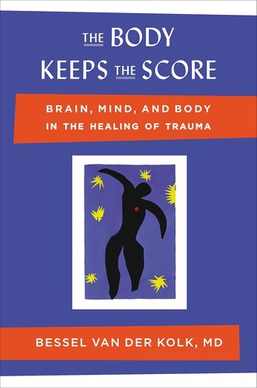
It's been about a decade since I read it, but it's a great book.I'm listening to "The Body Keeps the Score" on audible.
It's amazing and scary how trauma impacts people. Just another reason that we should avoid wars, etc.
The Body Keeps the Score: Brain, Mind, and Body in the Healing of Trauma by Bessel van der Kolk is a groundbreaking book that explains how trauma physically reshapes the brain and body, affecting everything from memory and concentration to relationships and self-control. Drawing on neuroscience and decades of clinical experience, van der Kolk argues that trauma is stored in the body and requires holistic, body-based therapies like yoga, EMDR, neurofeedback, and mindfulness to heal, moving beyond traditional talk therapy to help survivors reclaim their lives.
Key themes and concepts
Why it's significant
- Trauma's physical impact:
Traumatic stress changes the brain's limbic system and brainstem, compromising the ability to feel pleasure, engage with the world, and trust others.
- Beyond the mind:
Trauma isn't just a mental event; it's a physiological one, stored in the nervous system, which is why the body "keeps the score".
- Holistic healing:
The book advocates for treatments that help people reconnect with their bodies, such as trauma-sensitive yoga, neurofeedback, meditation, and theater, to activate the brain's natural neuroplasticity.
- Power of relationships:
It emphasizes that relationships are both a source of trauma and a key to healing, offering hope for recovery.
- Bestselling and influential:
A #1 New York Times bestseller, it's considered a seminal work in trauma research and treatment.
- Accessible science:
It translates complex neuroscience into an accessible narrative, using case studies to illustrate how trauma affects individuals and societies.
- Hope for recovery:
It provides a hopeful message by detailing innovative and traditional methods that help survivors move from a state of helplessness to one of empowerment.
I'm definitely a victim of that mechanism. Many years of being startled randomly numerous times per day and night from peaceful existence to being thrust in the midst of horrific scenarios 5 minutes later. It jacked me up badly a few years ago to the point where I was almost suicidal. On my days and nights off I was a shell of myself and was an anxious, twisted wreck. I didn't want to kill myself but I had no more desire to live. Thankfully I got help and a new perspective on things. Now I value every single day.I have heard a lot lately about the nervous system playing a big factor in mental health, and how people get stuck in fight or flight mode and need a "reset" of their nervous system.
By "reset" do you mean something carby while on the couch in front of the boob tube?I have heard a lot lately about the nervous system playing a big factor in mental health, and how people get stuck in fight or flight mode and need a "reset" of their nervous system.

- Messages
- 8,785
This is where I am. I don't even think about suicide, because I want to be here, but I do want to figure out how to live a more peaceful life.On my days and nights off I was a shell of myself and was an anxious, twisted wreck. I didn't want to kill myself but I had no more desire to live. Thankfully I got help and a new perspective on things. Now I value every single day.
I don't sleep well and I'm anxious most of the time. It's exhausting. But I've started preparing for the job search and we've started the divorce. I really hope the company has the voluntary separation program again next year, so I can just move on.

- Messages
- 1,740
About 6 years ago my daughter came to work with me and asked me if I had ever been diagnosed for ADHD. I said when I was coming along, we called it entrepreneur!
Since then, I’ve been screened by psychiatrist and I am currently in therapy and they did suggest Ridellan which I’ve been on for almost a year!
The psychiatric SAT they made you fill out every 15th question was have you thought about suicide? I eventually responded not until you kept asking me about it every 15 sentences!
No doubt, my daughter did recognize what she had seen in her life that had labels on it. As a 68-year-old dude we never had terms for ADHD or bipolar or any of it but all of its real shit!
My therapy for the last three years along with figuring out what kind of ADHD meds I needed have been a game changer!
They say you can’t teach an old dog new tricks, but my guess is old dogs wanna live as long as they can!
Get therapy if you can afford it and if you can’t find a group that talks about similar problems, we all need each other and I promise we are better at the three H’s when we ask whomever we’re trying to help: “How can I help: Hold you? Hear you? Help you?” That’s the best order of asking as we all can see how to fix others shit while we don’t fix ours!
I’ve posted this before but I love it for the truth it exposes!
Especially how all of us guys start with the fixing before the holding or hearing!
Check out this video, "girl with the nail in her head"
https://share.google/Da7YsEKmNErKfozub
Since then, I’ve been screened by psychiatrist and I am currently in therapy and they did suggest Ridellan which I’ve been on for almost a year!
The psychiatric SAT they made you fill out every 15th question was have you thought about suicide? I eventually responded not until you kept asking me about it every 15 sentences!
No doubt, my daughter did recognize what she had seen in her life that had labels on it. As a 68-year-old dude we never had terms for ADHD or bipolar or any of it but all of its real shit!
My therapy for the last three years along with figuring out what kind of ADHD meds I needed have been a game changer!
They say you can’t teach an old dog new tricks, but my guess is old dogs wanna live as long as they can!
Get therapy if you can afford it and if you can’t find a group that talks about similar problems, we all need each other and I promise we are better at the three H’s when we ask whomever we’re trying to help: “How can I help: Hold you? Hear you? Help you?” That’s the best order of asking as we all can see how to fix others shit while we don’t fix ours!
I’ve posted this before but I love it for the truth it exposes!
Especially how all of us guys start with the fixing before the holding or hearing!
Check out this video, "girl with the nail in her head"
https://share.google/Da7YsEKmNErKfozub

- Messages
- 2,137
My mental health is definitely not great right now. Perhaps responding to this thread will get me to look through it but I feel like this is a good first step.
Just an enormous amount of anxiety and stress. Family stuff, career troubles, etc.
Bleh. Anyway, I see you guys are being much more productive than I am so I’ll take a look tomorrow.
Just an enormous amount of anxiety and stress. Family stuff, career troubles, etc.
Bleh. Anyway, I see you guys are being much more productive than I am so I’ll take a look tomorrow.
- Messages
- 3,510
Take care of yourself. I am there with ya in needing to do the same. I never will but I need to.My mental health is definitely not great right now. Perhaps responding to this thread will get me to look through it but I feel like this is a good first step.
Just an enormous amount of anxiety and stress. Family stuff, career troubles, etc.
Bleh. Anyway, I see you guys are being much more productive than I am so I’ll take a look tomorrow.

- Messages
- 1,777
Sorry to hear that man. Sincerely hope things get better for your situation very soonMy mental health is definitely not great right now. Perhaps responding to this thread will get me to look through it but I feel like this is a good first step.
Just an enormous amount of anxiety and stress. Family stuff, career troubles, etc.
Bleh. Anyway, I see you guys are being much more productive than I am so I’ll take a look tomorrow.

theel4life
Inconceivable Member
- Messages
- 3,051
With the way this country is now how could you not have stress and anxiety? I’m 58 and have never seen our country this bad off. MAGA has destroyed our social fabric and ability to communicate with each other. Not to mention the economy and world affairs. Very depressing times.
I'm 74 and have seen it worse. We're not quite back to the 50s and 60s yet and are unlikely to fall that far. The divisions are maybe stronger but there is considerably fewer living in some kind of naive bliss.With the way this country is now how could you not have stress and anxiety? I’m 58 and have never seen our country this bad off. MAGA has destroyed our social fabric and ability to communicate with each other. Not to mention the economy and world affairs. Very depressing times.
superrific
Master of the ZZLverse
- Messages
- 13,204
Don't do that, not in America. I know what you mean, but hell a bus is better than Amtrak once you get past the mississippi.I want to take a coast to coast train ride.

Bigs23
Inconceivable Member
- Messages
- 3,778
Do it now.I'm exhausted. I need four months off work to recover.
I want to take a coast to coast train ride.
superrific
Master of the ZZLverse
- Messages
- 13,204
Yes, this is an important point and what I came here to post.With the way this country is now how could you not have stress and anxiety? I’m 58 and have never seen our country this bad off. MAGA has destroyed our social fabric and ability to communicate with each other. Not to mention the economy and world affairs. Very depressing times.
All of us here are interested in politics. That is, after all, why we are here. So politics will affect us, as we are not tuning it out. And when politics is awful, it's easy for that stress and frustration and fear and anger to leach into other aspects of our lives. But no matter, because we have release valves. Like UNC sports! Oh.
So basically our common macro environment -- i.e. the thing that most of us have in common -- has been terrible and nerve-wracking. That affects mental health.
I'm not saying to "block out the noise from outside." If you could do that, you'd have done it. I'm asking people who are feeling down to not be hard on themselves. Being down is rational under the circumstances.
People here also tend to have a common release valve: root for good sports teams and have fun with it. Oh.
superrific
Master of the ZZLverse
- Messages
- 13,204
I've also been having a tough week. In part because I threw out my back and it's not getting better very quickly. And in part because life is stressful.My mental health is definitely not great right now. Perhaps responding to this thread will get me to look through it but I feel like this is a good first step.
Just an enormous amount of anxiety and stress. Family stuff, career troubles, etc.
Bleh. Anyway, I see you guys are being much more productive than I am so I’ll take a look tomorrow.
My wife the psychiatrist tells people to "relax into it." Her patients, and her family and friends. On the surface that's incredibly corny but I have found it a useful formulation. It's a slogan version of a lot of therapy involving mindfulness and expectation management. But it works for me, at least a little.
Relax into it. You can't change it. You can change you. That doesn't mean surrender. It means that however heavy the weight feels right now, it's temporary and compared to the entirety of your lived experience, small.
superrific
Master of the ZZLverse
- Messages
- 13,204
They actually repeat a lot of questions. Some of them are close to literal repeats, as in this example. In other cases, they ask what amounts to the same question but in a different way.The psychiatric SAT they made you fill out every 15th question was have you thought about suicide? I eventually responded not until you kept asking me about it every 15 sentences!
The reason is to catch people who are trying to game the test. That is, to catch people trying to present themselves in an overly favorable or unfavorable light. The idea is that it's hard for an unskilled person (unskilled relative to the test) to consistently fake it all the way through.
superrific
Master of the ZZLverse
- Messages
- 13,204
There are new therapies for that. I don't know how well they work. One of them -- the magic mushroom modality of treatment by mild hallucination -- was not approved by the FDA, but there are people who swear by it. The FDA's denial was completely understandable but also confusing to some degree. It was obvious they aren't sure how to evaluate it. That is to say, it's not necessarily a bad treatment; we just don't really know how to define good.I'm definitely a victim of that mechanism. Many years of being startled randomly numerous times per day and night from peaceful existence to being thrust in the midst of horrific scenarios 5 minutes later. It jacked me up badly a few years ago to the point where I was almost suicidal. On my days and nights off I was a shell of myself and was an anxious, twisted wreck. I didn't want to kill myself but I had no more desire to live. Thankfully I got help and a new perspective on things. Now I value every single day.
superrific
Master of the ZZLverse
- Messages
- 13,204
I wouldn't take that book too seriously. I've not read it and I don't know much about it, but among mental health pros, it's . . . it's not uniformly endorsed. It gets some stuff wrong and some of it is untested or controversial.I'm listening to "The Body Keeps the Score" on audible.
It's amazing and scary how trauma impacts people. Just another reason that we should avoid wars, etc.
The Body Keeps the Score: Brain, Mind, and Body in the Healing of Trauma by Bessel van der Kolk is a groundbreaking book that explains how trauma physically reshapes the brain and body, affecting everything from memory and concentration to relationships and self-control. Drawing on neuroscience and decades of clinical experience, van der Kolk argues that trauma is stored in the body and requires holistic, body-based therapies like yoga, EMDR, neurofeedback, and mindfulness to heal, moving beyond traditional talk therapy to help survivors reclaim their lives.
Key themes and concepts
Why it's significant
- Trauma's physical impact:
Traumatic stress changes the brain's limbic system and brainstem, compromising the ability to feel pleasure, engage with the world, and trust others.
- Beyond the mind:
Trauma isn't just a mental event; it's a physiological one, stored in the nervous system, which is why the body "keeps the score".
- Holistic healing:
The book advocates for treatments that help people reconnect with their bodies, such as trauma-sensitive yoga, neurofeedback, meditation, and theater, to activate the brain's natural neuroplasticity.
- Power of relationships:
It emphasizes that relationships are both a source of trauma and a key to healing, offering hope for recovery.
- Bestselling and influential:
A #1 New York Times bestseller, it's considered a seminal work in trauma research and treatment.
- Accessible science:
It translates complex neuroscience into an accessible narrative, using case studies to illustrate how trauma affects individuals and societies.
- Hope for recovery:
It provides a hopeful message by detailing innovative and traditional methods that help survivors move from a state of helplessness to one of empowerment.
That's not to say it's worthless. When I say "too seriously" I mean just that -- I can't say it shouldn't be taken at all seriously, but there are some issues. If it works for you, great. It won't work for a lot of people, and that's not because there is something wrong with them.
Share: